

Transcript
In 480 BC, three hundred Spartans stood in a mountain pass at Thermopylae and held back the largest army the world had ever seen. They bought Greece days. Those days saved everything that came after.
Ancient Greece was never a single nation. It was a patchwork of fiercely independent city-states scattered across a mountainous peninsula, each with its own laws, gods, and dialect. What bound them was culture: a shared language, shared stories, and a restless hunger to understand the world.
Out of the Greek Dark Ages, around 800 BC, the city-state emerged as the defining unit of Greek life. Athens pioneered democracy, granting all male citizens an equal voice in the assembly. Sparta built a warrior society so total that boys left their families at seven to train for war.
When Persia invaded in 490 BC, Athens stood almost alone at Marathon and drove the Persian fleet back across the Aegean. A decade later, Xerxes returned with a vastly larger force. The Spartans died at Thermopylae. But Greece held. The Persian fleet was shattered at Salamis, and the army broken at Plataea the following year.
Victory unleashed Athens. The Delian League, formed to defend against Persia, became an Athenian empire. The Parthenon rose above the city. Socrates argued in the streets. Herodotus invented history. Sophocles filled the theatre. This was the Golden Age, and it burned brilliantly.
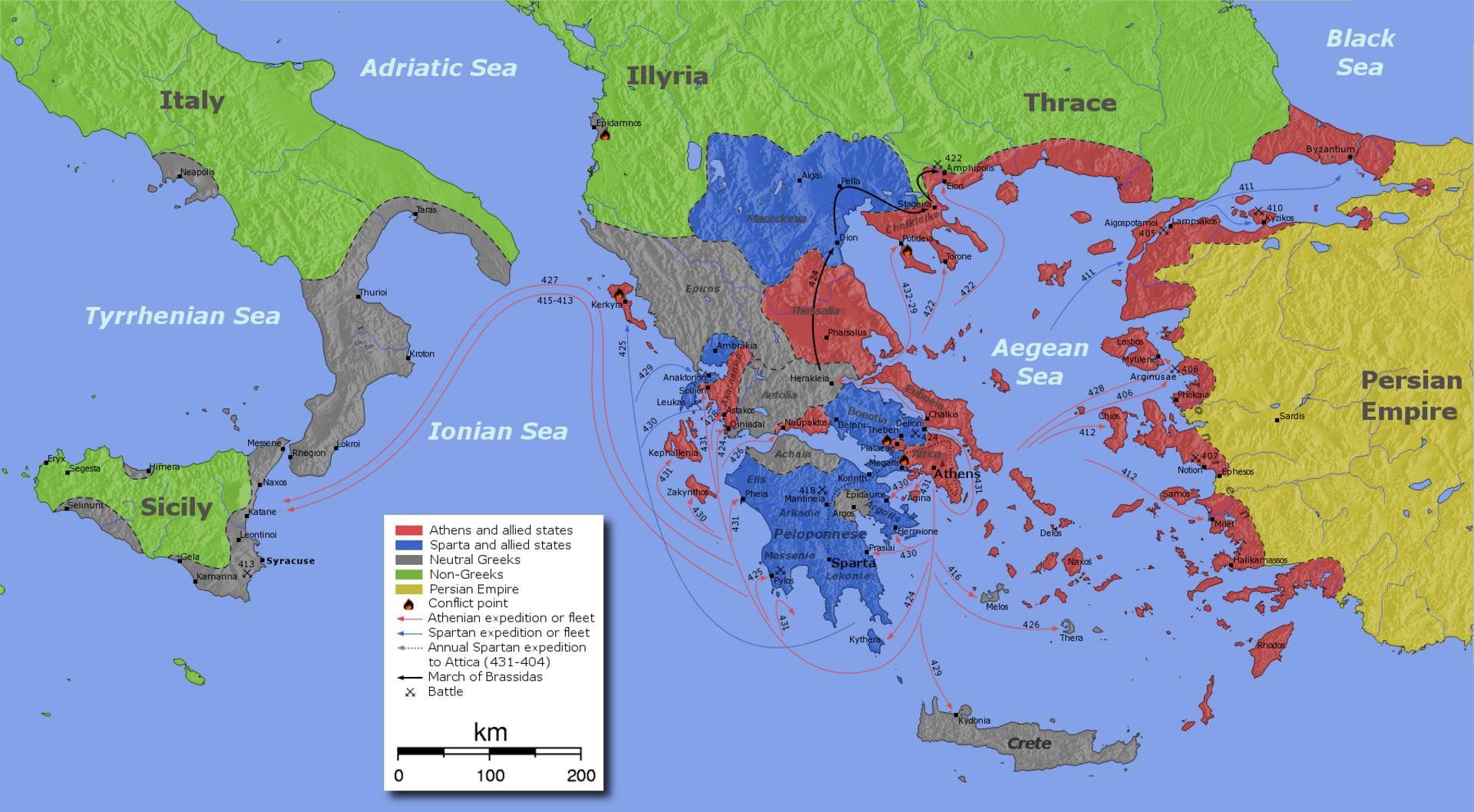
It also burned fast. Sparta, suspicious of Athenian power, went to war in 431 BC. The Peloponnesian War ground on for a generation, ending only when Sparta strangled Athens by sea in 405 BC and installed a brutal oligarchy. Neither city ever fully recovered.
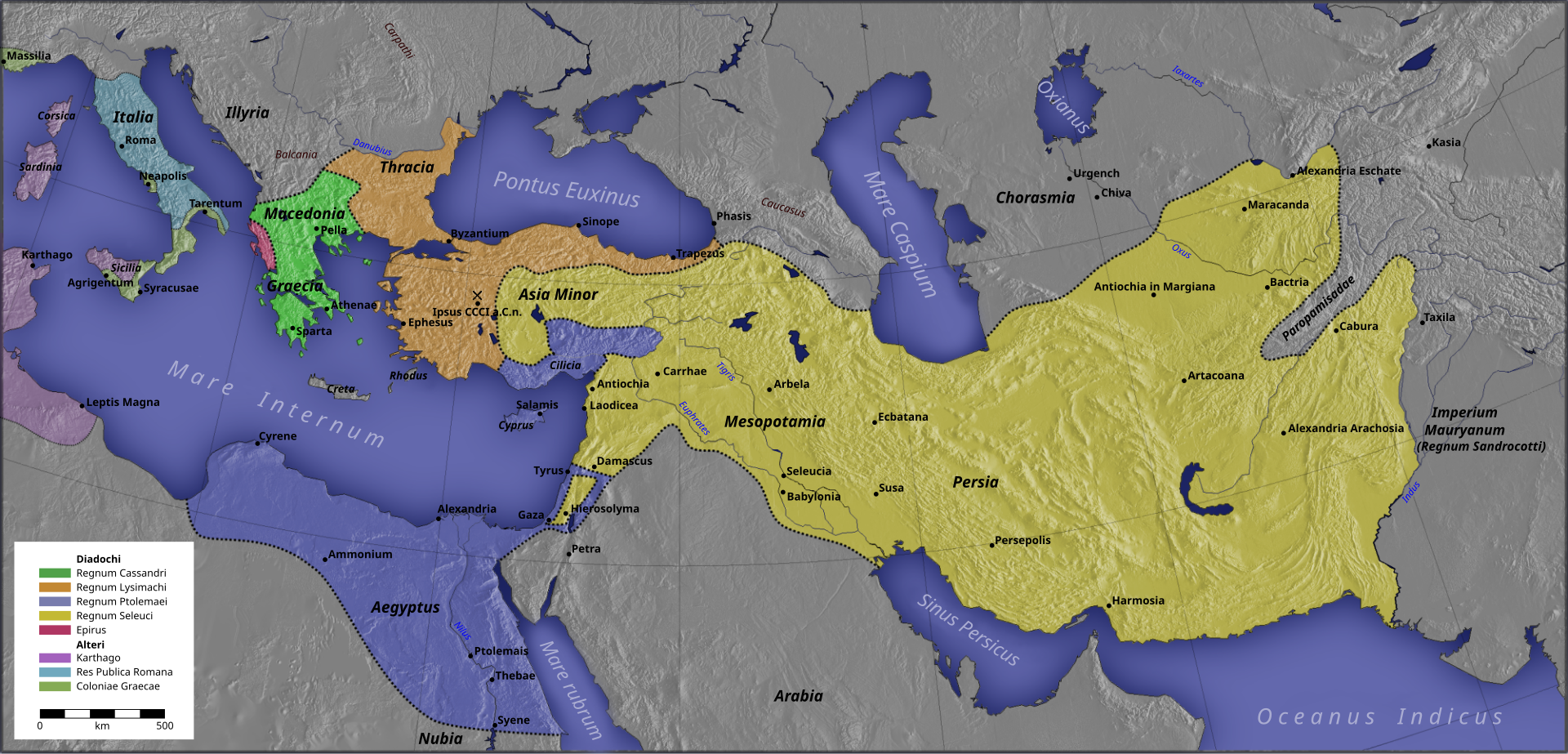
The exhaustion of the city-states left a vacuum. Philip the Second of Macedon filled it, defeating a Greek alliance at the Battle of Chaeronea in 338 BC and binding the poleis into his League of Corinth. His son Alexander the Great then took that unified force east, shattered the Persian empire, and carried Greek language and thought as far as India.
Alexander died in Babylon in 323 BC, aged thirty-two, without naming an heir. His generals carved his empire into rival kingdoms. Greek culture spread wider than ever, but the independent city-states that had created it were gone.
Rome absorbed the Greek world piece by piece. The last Hellenistic kingdom, Ptolemaic Egypt, fell in 30 BC. The Academy of Athens, founded by Plato, was closed by the emperor Justinian in 529 AD. Ancient Greece, as a living civilisation, ended there.
What remained was everything. Democracy, philosophy, geometry, drama, the very idea of history: all of it passed through Rome, through Byzantium, through the Islamic scholars who preserved the texts, and into the European Renaissance. Captive Greece, as the Roman poet Horace wrote, took captive her conqueror. She still has not let go.
Image: Louis Stanislas d'Arcy Delarochette, Public domain · AI-narrated · Drawn from Wikipedia · CC BY-SA 4.0