

Transcript
Think for a moment about what does not exist. No Parthenon standing on its hill above Athens. No tradition of democratic government. No Socrates, no Plato, no Aristotle. No Olympic Games in the form we inherited them. All of it could have been erased, or at least strangled at birth, in the fifty years between 499 and 449 BC, when the largest empire the ancient world had yet seen turned its full attention toward a scattering of quarrelsome city-states on the western edge of its reach. The Greco-Persian Wars were not just a military contest. They were the collision that decided what kind of civilisation the Mediterranean world would become.
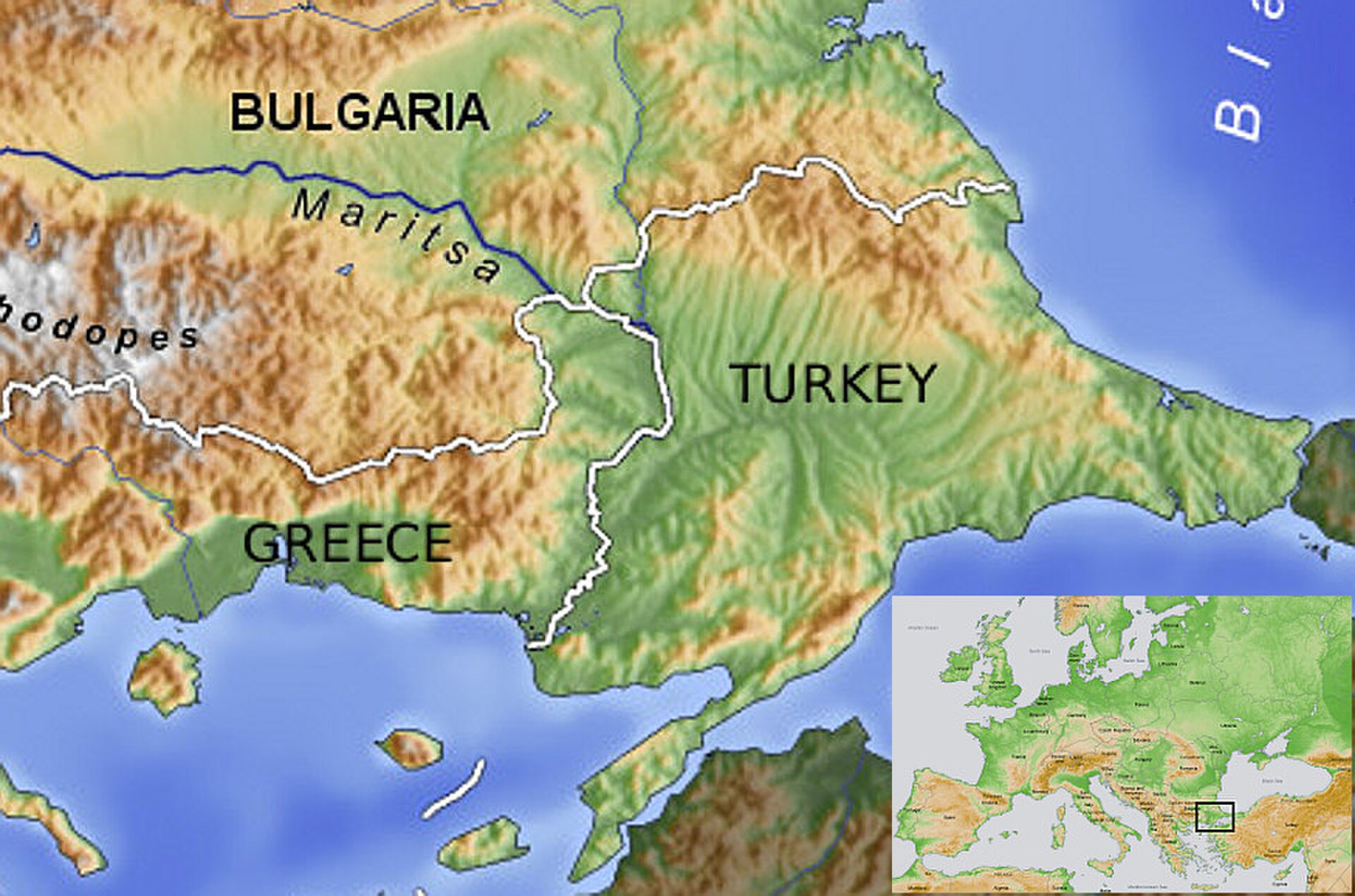
The story begins not in Greece but in Asia Minor, the long western arm of what we now call Turkey, where Greek-speaking cities had been settled for centuries. These were the Ionian cities: Miletus, Ephesus, Samos, and their neighbours, strung along a coast of extraordinary beauty and commercial energy. For generations they had lived under Lydian rule, then under the Lydian king Croesus, who conquered them in the years around 560 BC. But in 550 BC, a Persian prince named Cyrus overthrew the Median kingdom, founded the Achaemenid Empire, and set about absorbing everything around him. When Croesus, tempted by an oracle's famously ambiguous promise that crossing the Halys River would destroy a great empire, attacked the Persians, he was defeated. The empire he destroyed was his own. Lydia fell, and the Ionian cities fell with it.
Cyrus had asked the Ionians to rebel against Lydian rule before his conquest; they had refused. Now, with Lydia gone, they offered to become his subjects on the same terms they had served Croesus. He refused in turn, and sent a general to conquer them one by one. The Phocaeans, rather than submit, abandoned their city entirely and sailed into exile. A few others followed. The rest stayed and were absorbed. But the Persians discovered almost immediately that ruling Greek cities was not like ruling the rest of their vast empire. Elsewhere, Cyrus had found local elites, priesthoods, and aristocracies willing to serve as intermediaries. In Ionia, no such stable group existed. So the Persians did what seemed practical: they appointed local Greek tyrants, strongmen loyal to Persia, to govern each city. It was a solution that satisfied almost no one, and it planted the seed of everything that followed.
By 499 BC, that seed had grown into a crisis. The tyrant of Miletus, a man named Aristagoras, had talked the Persian regional governor into backing an expedition to conquer the island of Naxos. The expedition failed completely. Sensing that his position was now untenable and that the Persians would remove him, Aristagoras made a gambler's choice: he renounced his own tyranny, called on the Ionian cities to do the same, and ignited a full-scale revolt against Persian rule. The Ionian Revolt, as it became known, spread rapidly across the Greek cities of Asia Minor and beyond, into the regions of Aeolis, Doris, Caria, and even Cyprus.
Aristagoras sailed to mainland Greece to seek allies. Sparta, the most powerful land force in Greece, turned him down. Athens, newly democratic after throwing out its own tyrant a decade earlier, agreed to help, and sent twenty ships. The small city of Eretria sent five more. In 498 BC, the combined Ionian and Athenian force marched inland, captured the Persian regional capital of Sardis, and burned it to the ground. It was an extraordinary act of aggression deep inside Persian territory. On their retreat back to the coast, however, the Persians caught them and inflicted a sharp defeat at Ephesus. The Athenians, perhaps sensing the consequences, sailed home and took no further part in the revolt.
The burning of Sardis mattered enormously, because Sardis was not just a city. It was the seat of the Persian governor for the entire western half of the empire, a symbol of Achaemenid power in the region. The Persian king Darius the Great, according to the historian Herodotus, was so furious when he heard that Athenians had helped burn it that he had a servant whisper in his ear before every meal: 'Master, remember the Athenians.' Whether that story is literally true matters less than what it represents. Darius made a personal vow of revenge, and that vow would shape the next decade of history.
The revolt itself dragged on for six more years. The Persians responded in 497 BC with a three-pronged campaign to recapture outlying territory, but one of their armies was ambushed and destroyed in Caria, producing a stalemate through 496 and 495 BC. By 494 BC, the Persians had regrouped and moved decisively. They aimed straight at Miletus, the heart of the rebellion. The Ionian fleet gathered to defend the city by sea, but it was shattered at the Battle of Lade when the Samian contingent defected mid-battle. Miletus fell. Its population was enslaved and deported. The revolt collapsed. Caria surrendered. By 493 BC, the Persians had re-established control across Ionia, and Darius began planning what came next.
The first Persian invasion of Greece came in 492 BC, led by Darius's son-in-law Mardonius. It was partly a punitive expedition and partly a strategic one: Darius wanted to pacify the northern Aegean, secure Thrace and Macedonia as buffer territories, and set the stage for a direct strike at Athens and Eretria. Mardonius succeeded in re-subjugating Thrace and forcing Macedonia into full client status. But then a violent storm wrecked much of his fleet as it rounded the rocky peninsula of Mount Athos, and a Thracian raid wounded Mardonius himself. The campaign ended early.
Read full transcript (26 more paragraphs)
Darius responded the following year by sending ambassadors to every Greek city demanding the traditional tokens of submission: earth and water. Most of the smaller cities complied. Athens and Sparta did not. Worse, both cities executed the ambassadors. This was an act of profound diplomatic outrage, a deliberate provocation, and it made a second campaign inevitable. In 490 BC, a Persian force under two commanders, Datis and Artaphernes the younger, sailed directly across the Aegean rather than marching overland. They island-hopped through the Cyclades, collecting hostages and tribute, before razing the city of Naxos as punishment for its earlier resistance. Then they turned toward Eretria.
Eretria, on the island of Euboea, had been one of the cities that helped burn Sardis. It had not forgotten, and neither had Darius. The Eretrians chose to defend their walls rather than fight in the open. For six days the Persians attacked without breaking through. On the seventh day, two Eretrian citizens opened the gates. The city was razed. Its temples were burned in deliberate repayment for Sardis. The remaining population was enslaved and eventually settled in a village deep inside the Persian Empire, near Susa. Eretria ceased to exist as a free city. Athens was next.
The Persian fleet landed at the bay of Marathon, roughly forty kilometres north of Athens, in the late summer of 490 BC. The terrain was a long coastal plain, flanked by hills and marsh, which seemed to favour the Persian cavalry. The Athenians marched out to meet them, joined only by a contingent from the small city of Plataea. They occupied the high ground at the ends of the plain, blocking both exits, and waited. The two sides watched each other for five days without fighting.
Then something shifted. The Persians began loading their cavalry back onto the ships, apparently intending to sail around to Athens while the Athenian army was pinned at Marathon. It was the moment the Athenians had been waiting for. The Athenian general Miltiades, the commander with the most direct experience of fighting Persians, ordered the attack. The Athenians ran. Running into battle was unusual; it reduced the time the enemy's archers could pick them off. They struck the Persian line hard on the wings, routing the lighter Persian infantry there, then wheeled inward to crush the stronger Persian centre from both sides. The Persian army broke and fled for the ships.
Herodotus counted six thousand four hundred Persian bodies on the plain. The Athenians lost one hundred and ninety-two men. It was not just a victory. It was a revelation. The Greeks had beaten the Persians in open battle, without cavalry, without archers to match, armed only with their longer spears and heavier armour. The hoplite phalanx, the shoulder-to-shoulder formation of armoured spearmen that the Greeks had been refining since at least 650 BC, had proved itself against the most powerful army in the world. An Athenian runner, according to later tradition, carried the news back to Athens before collapsing dead. The Persian fleet, seeing no advantage, sailed home. Darius began planning a third, larger campaign. He never launched it. In 486 BC, Egypt revolted, and Darius died before he could suppress it.
The throne passed to Darius's son Xerxes the First, who crushed the Egyptian revolt and then resumed his father's Greek project with an ambition that dwarfed anything that had come before. This was not to be a punitive raid or a targeted strike. Xerxes intended to conquer Greece entirely. For four years, from roughly 485 to 481 BC, the Persian Empire mobilised on a scale without precedent. Two pontoon bridges were constructed across the Hellespont, the narrow strait between Asia and Europe, so the army could march across dry-shod. A canal was dug through the neck of the Mount Athos peninsula, the very coastline that had wrecked Mardonius's fleet, so the navy could pass without rounding it. These were engineering feats that no other state of the era could have attempted.
Modern historians estimate the Persian army at something in the region of two hundred thousand men, drawn from dozens of nations across the empire: Medes, Persians, Egyptians, Ethiopians, Indians, and many others, each fighting in their own traditional manner. The Persian core relied on archers and lighter infantry, with the famous Immortals as their elite formation, backed by cavalry that had no equal in the Greek world. The fleet numbered somewhere around six hundred warships, manned primarily by Phoenicians, Egyptians, and Cypriots. This force crossed into Europe in April 480 BC and marched south. Along the way, Greek city after Greek city submitted.
Greece itself was divided. Many states, including Argos and Thebes, either submitted outright or were suspected of planning to do so once the Persians arrived. Only a coalition of roughly seventy city-states, led by Sparta on land and Athens at sea, chose to resist. Even among themselves, these allies argued constantly. The Spartans wanted to defend only the Peloponnese, the southern peninsula, and were prepared to abandon everything north of the Isthmus of Corinth. The Athenians, whose city lay north of the isthmus, found this arrangement deeply unsatisfying. It was the Athenian politician Themistocles who held the alliance together, and who had spent the previous decade preparing Athens for exactly this moment.
Themistocles had seen the Persian threat coming years before most of his countrymen. In 483 BC, when a rich new seam of silver was discovered in the Athenian mines at Laurium, he persuaded the Athenian assembly to spend the windfall not on distributions to citizens but on building a fleet of triremes, the triple-banked warships that dominated Mediterranean naval warfare. He argued publicly that the ships were needed for a war with the nearby island of Aegina. His real purpose, most Athenians understood privately, was Persia. The vote passed. Athens built its fleet. When Xerxes crossed the Hellespont, Athens had the largest navy in Greece.
The allied strategy for 480 BC was built around a single geographical fact: the pass of Thermopylae, where the road between northern and southern Greece squeezed to almost nothing between the mountains and the sea. A small force holding that pass could delay an entire army indefinitely. Simultaneously, the allied fleet would hold the straits of Artemisium nearby, preventing the Persian navy from outflanking the land position. Both battles would have to be fought at once, because each depended on the other.
Sparta sent its king Leonidas the First with his personal bodyguard of three hundred men, supplemented by contingents from allied cities totalling perhaps seven thousand fighters in all. The three hundred Spartans were veterans, all of them already fathers, chosen because their deaths, if it came to that, would leave sons behind. Leonidas occupied the pass in mid-August 480 BC and waited. Xerxes waited too, for three days, expecting the Greeks to flee when they understood what was coming. They did not flee. When the Persians finally attacked, the narrow pass neutralised their numbers entirely. The hoplites held the line, rotating tired men to the rear, fighting in shifts. Two full days of Persian assaults, including attacks by the Immortals, broke on the Greek phalanx.
Then a local man named Ephialtes showed Xerxes a mountain path that wound behind the Greek position. A Persian force marched through the night. When scouts brought word to Leonidas that they were being outflanked, he dismissed most of the allied contingents, ordering them to retreat and live to fight again. He remained with the three hundred Spartans, a force of Thespians who refused to leave, and a contingent of Thebans, reportedly kept as hostages. On the final morning, the remaining defenders sallied out from the wall into the wider part of the pass and fought until they were all killed. Leonidas was among the dead. The pass was open.
At sea, the allied fleet at Artemisium had fought the Persians to something close to a draw over the same three days, but the news of Thermopylae made their position untenable. They retreated south to the island of Salamis, off the coast of Attica. Athens itself was evacuated. The Acropolis was held briefly by a small group who had barricaded themselves in, but the Persians broke through. Xerxes ordered the destruction of Athens. The temples burned. The city that had helped burn Sardis now paid the same price.
Themistocles had prepared for this too. Before the campaign, when the Athenians had consulted the oracle at Delphi and received a typically ambiguous response about wooden walls, Themistocles had argued that the wooden walls meant the fleet. Now, with Athens burning and the Persian army occupying most of Greece, the fleet was all that remained. The allied navy gathered in the narrow straits between the island of Salamis and the Attic shore, and Themistocles worked to keep it there.
Some allied commanders wanted to sail south and defend the Peloponnese. Themistocles, according to Herodotus, sent a secret message to Xerxes suggesting that the Greek fleet was about to scatter, urging the Persians to attack immediately before it could escape. Whether this was a bluff designed to force the allied fleet to fight, or a genuine piece of manipulation, it worked. The Persian fleet entered the narrow straits of Salamis in September 480 BC. In the open sea their numbers were an advantage. In the straits they became a liability: ships could not manoeuvre, formations broke apart, and the heavier Greek triremes rammed them at close quarters. The Persians lost at least two hundred ships. Xerxes watched the disaster from a throne set up on the shore.
Salamis did not end the war, but it ended Xerxes's personal involvement in it. Fearing that the Greeks might sail north and destroy the pontoon bridges over the Hellespont, trapping his army in Europe, Xerxes retreated to Asia with the bulk of his forces. He left his general Mardonius in Greece with a large, hand-picked army to complete the conquest the following year. Mardonius wintered in Boeotia and Thessaly. The Athenians returned briefly to their ruined city.
In the spring of 479 BC, Mardonius tried diplomacy first, offering Athens generous terms through an intermediary: autonomy, restoration, and Persia's friendship. The Athenians rejected the offer publicly and pointedly, making sure a Spartan delegation was present to witness the refusal. Athens was evacuated again. The Persians marched south and reoccupied it for the second time. But the moment of Persian dominance in Greece was almost over.
The decisive land battle of the entire war came in June 479 BC, near the small Boeotian town of Plataea. A large Spartan-led army, under the command of the regent Pausanias, marched north from the Peloponnese and took up position on high ground above the plain. Mardonius manoeuvred his cavalry to harass and cut off Greek supply lines, trying to draw the allies down into open terrain where his horsemen could operate freely. The Greeks stayed on the hills. For days both sides manouvered without committing.
Then Pausanias ordered a night-time retreat to improve his supply position. It went wrong. The Athenians, the Spartans, and the Tegeans ended up isolated on separate hills, with the other contingents scattered near Plataea. Mardonius saw his opportunity and ordered a full advance. The Persian infantry charged the Spartan position. But the narrow terrain again worked against the Persians: their wicker shields and lighter armour were no match for the Greek hoplites in close combat. The Spartans broke through to Mardonius's personal bodyguard. Mardonius was killed. Without their commander, the Persian army dissolved. Forty thousand men managed to escape north toward Thessaly. The rest were trapped against the Persian camp and slaughtered. The Persian army in Europe was gone.
On the same afternoon, according to Herodotus, a rumour of the victory at Plataea reached the allied fleet, then anchored off the coast of Ionia at Cape Mycale. Their morale soaring, the allied marines landed and attacked the Persian fleet where it had been beached for protection. They destroyed it. The Battle of Mycale and the Battle of Plataea may or may not have happened on the same day, but together they ended the second Persian invasion. Persia would never again send an army into mainland Greece.
The Greeks did not stop at driving the Persians out. The allied fleet sailed north to the Hellespont, where the pontoon bridges had already been broken up by storms. The Peloponnesian contingents sailed home, but the Athenians stayed to besiege Sestos, the main Persian stronghold on the European side of the strait. After a siege of several months, the food ran out, the Persian garrison fled by night, and the Athenians took the city. The Persian governor was captured and crucified at the demand of the local population he had plundered. The Athenians sailed home carrying the bridge cables as trophies.
In 478 BC, the allied fleet, now under the command of the Spartan regent Pausanias, sailed first to Cyprus and then to Byzantium, the city commanding the strait between Europe and Asia. Both were taken. But Pausanias's behaviour in command was becoming a problem. He was arrogant, arbitrary, and alienated the Ionian allies who had just been freed from Persian rule. The Ionians asked the Athenians to take leadership instead. The Spartans recalled Pausanias, tried him, acquitted him, but did not restore his command. When he returned to Byzantium as a private citizen and tried to hold the city on his own account, the Athenians expelled him. He crossed to Asia and was eventually recalled to Sparta again, where he starved himself to death rather than face trial. Spartan leadership of the Greek alliance ended not with a formal vote but with the collapse of its last representative.
With Sparta effectively withdrawing, the Athenians called a congress on the sacred island of Delos and formed a new alliance: the Delian League, as later historians would name it. Its stated purpose was to avenge the wrongs done by Persia and to prevent any future invasion. Member states could contribute either ships or money to a common treasury; most chose money. Athens led, and Athens benefited. Throughout the 470s BC, the league campaigned to clear the remaining Persian garrisons from Thrace and the northern Aegean, primarily under the Athenian commander Cimon, a skilled and aggressive general.
In the early 460s BC, Cimon carried the fight into Asia Minor itself. At the Battle of the Eurymedon, fought in Pamphylia on the southern coast of what is now Turkey, the Delian League achieved a spectacular double victory in a single day: the allied fleet destroyed a Persian fleet at sea, then landed its marines to rout the Persian army on shore. After the Eurymedon, Persia adopted a largely defensive posture, avoiding open battle wherever possible. The Ionians were free. The objective the league had been founded to achieve was, in practical terms, accomplished.
But Athens did not stop. Towards the end of the 460s BC, when a pharaoh named Inaros the Second rebelled against Persian rule in Egypt, Athens threw the league's resources into supporting him. It was the most ambitious and ultimately the most disastrous decision of the entire war. An Athenian fleet sailed up the Nile. The rebels and their Greek allies won early victories and besieged the Persian garrison in Memphis for three years. Then the Persians counterattacked. The besiegers became the besieged. The Athenian force was trapped on an island in the Nile for eighteen months before being destroyed. Inaros was captured, taken to the Persian capital at Susa, and executed by crucifixion. The Egyptian adventure cost Athens an entire expeditionary army.
The disaster in Egypt, combined with ongoing conflict inside Greece itself, persuaded Athens to pause. But in 451 BC, with a truce agreed among the Greek states, Cimon led one more expedition, this time to Cyprus. He was besieging the city of Kition when he died, from illness or a wound, the ancient sources are unclear. His army decided to withdraw, fighting its way out with a double victory at the Battle of Salamis-in-Cyprus. With Cimon gone and the Cyprus campaign inconclusive, the fighting simply stopped. No dramatic final battle, no formal ceremony of surrender. The Delian League and the Achaemenid Empire both stepped back, and the war that had begun fifty years earlier with Aristagoras's failed expedition to Naxos ended not with a bang but with an exhausted silence.