

Transcript
On the morning of 7 December 1941, Japanese aircraft swept over Pearl Harbor. The attack was meant to buy time. Instead, it woke the one power large enough to decide the war.
The roots ran back to 1919. The Treaty of Versailles stripped Germany of territory and dignity. Adolf Hitler channelled that grievance into a movement, became chancellor in 1933, and began rebuilding German military power in open defiance of the settlement.
In Asia, Japan had already started its own war. An engineered incident in Manchuria in 1931 gave Tokyo a pretext to seize Chinese territory. By 1937, full-scale invasion of China was underway, with the massacre at Nanking killing tens of thousands of civilians.
On 1 September 1939, Germany invaded Poland. Britain and France declared war two days later. Within weeks, the Soviet Union invaded from the east under a secret pact with Hitler. Poland was erased from the map.
By June 1940, France had fallen. Germany occupied Paris. Britain stood alone, surviving the aerial Battle of Britain and the Blitz through Fighter Command and sheer endurance.
In June 1941, Hitler tore up his pact with Stalin and invaded the Soviet Union. The Eastern Front became the war's central slaughterhouse: millions of soldiers and civilians consumed in campaigns stretching from Leningrad to the Caucasus.
After Pearl Harbor, the United States entered the war. Japan's advance across the Pacific stalled at Midway in June 1942, where American codebreakers had read Tokyo's plans. Japan never fully recovered its naval power.
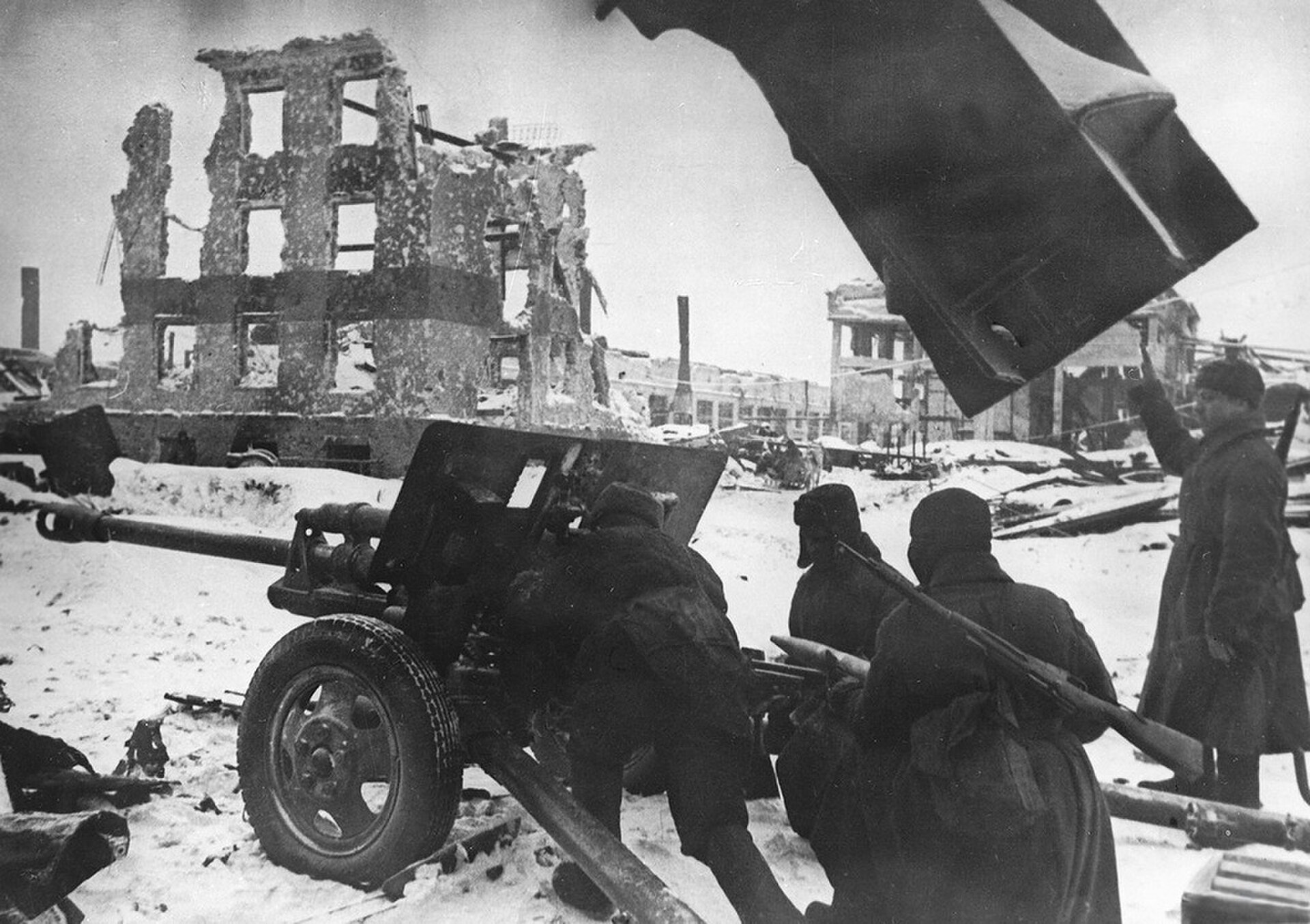
The tide turned in early 1943. German forces at Stalingrad were encircled and destroyed. Axis armies were driven from North Africa. Allied forces invaded Sicily, and Mussolini fell from power.
On 6 June 1944, the Western Allies landed in Normandy. Soviet forces simultaneously ground westward. Germany was squeezed from both sides. By April 1945, Soviet troops were fighting street by street in Berlin.
Hitler took his own life on 30 April 1945. Germany surrendered unconditionally on 8 May.
Japan fought on. In early August, the United States dropped atomic bombs on Hiroshima and Nagasaki. The Soviet Union declared war on Japan and destroyed its army in Manchuria. Emperor Hirohito accepted the Allied terms. Japan signed its surrender on the deck of the USS Missouri on 2 September 1945. The war was over.
Between sixty and seventy-five million people had died. The Holocaust had killed six million Jews. Whole cities were ash. From the wreckage came the United Nations, the Cold War between the United States and the Soviet Union, and the slow dismantling of Europe's empires. The world that emerged was unrecognisable from the one that had gone in.
Image: Richard Opitz, CC BY-SA 3.0 de · AI-narrated · Drawn from Wikipedia · CC BY-SA 4.0