

Transcript
In Westminster Abbey there is a stained-glass window that replaced one the bombs destroyed. It carries the badges of the fighter squadrons and the flags of the nations whose pilots flew with them: British, Polish, Czech, Canadian, Australian, New Zealander, South African, Belgian, Free French, and others still. The original window is gone. What stands in its place is the memorial to what was saved in the summer and autumn of 1940, when a battle fought entirely in the air decided whether the war against Hitler could continue at all.
The Battle of Britain was unlike any major campaign before it. No army crossed a river. No fleet met at sea. The decisive contest was fought by young men in the sky above southern England, between July and October 1940, by forces that had never faced each other at this scale or in this way. What was at stake was not a city or a province but something harder to define: the last organised resistance to Nazi Germany on the European continent, and with it the possibility that the war could still be won.
To understand why the summer of 1940 was so desperate, it helps to remember how quickly everything had collapsed. In the spring of that year, German forces had overwhelmed France and the Low Countries in a matter of weeks. By late June, France had surrendered. Britain had evacuated its army from the beaches at Dunkirk, leaving behind most of its heavy equipment. The continent was under German control from Norway to the Pyrenees. Britain stood alone, without a European ally, its army battered, its air force bloodied by the fighting over France.
Winston Churchill had become Prime Minister on 10 May 1940, the same day Germany launched its assault on France. He had inherited a government that included voices for a negotiated peace, most prominently the Foreign Secretary, Lord Halifax, who had quietly made contact with German intermediaries as early as 20 May. Churchill refused. He used his speeches to harden public opinion against any settlement, and he made clear to his Cabinet that Britain would fight on regardless.
It was Churchill who gave the battle its name, before a single bomb had fallen in the campaign proper. On 18 June 1940, speaking to the House of Commons, he said: 'What General Weygand called the Battle of France is over. I expect that the Battle of Britain is about to begin.' He went further. 'Upon this battle depends the survival of Christian civilization... If we can stand up to him, all Europe may be free and the life of the world may move forward into broad, sunlit uplands. But if we fail, then the whole world... will sink into the abyss of a new Dark Age.' The speech was not just rhetoric. It was a statement of what the next four months would decide.
Adolf Hitler was, in a strange way, reluctant to fight Britain. His 1925 book had expressed admiration for the British Empire, and throughout the summer of 1940 he made repeated attempts to draw Britain into a negotiated peace. On 19 July he made a formal speech to the German parliament, appealing, as he put it, 'to reason and common sense' and saying he could 'see no reason why this war should go on.' The British government rejected the offer without serious deliberation.
With diplomacy failing, Hitler turned to his military options. The German high command understood that an invasion across the English Channel was extraordinarily dangerous while the Royal Navy controlled those waters. The German navy, led by its commander Erich Raeder, repeatedly stressed that a seaborne landing could not be made safely until the Luftwaffe had established air superiority. On 16 July, Hitler issued a directive ordering preparations for Operation Sea Lion, a potential amphibious assault on southern England, but made clear it could only proceed once the RAF had been neutralised. The Luftwaffe was given the central task.
Hermann Göring, commander of the Luftwaffe, was confident his force could do it. He believed, based on poor intelligence and the Luftwaffe's recent run of successes, that RAF Fighter Command could be broken within four days of sustained assault in the south of England. After that, systematic bombing of military and industrial targets would extend northward until daylight raids could proceed unchallenged across the whole country. A climactic attack on London, timed to coincide with the invasion, would shatter British will. It was an ambitious plan, built on a foundation of serious miscalculation.
The Luftwaffe that assembled along the Channel coast in the summer of 1940 was a formidable instrument. It had been rebuilt in secret during the 1920s and officially declared in 1935, drawing on the experience of the Spanish Civil War and the campaigns in Poland, Scandinavia, and France. It was organised into three air fleets: one covering south-east England and London, a second responsible for the West Country and the Midlands, and a third attacking from Norway against the north of England and Scotland. Together they fielded hundreds of bombers and fighters along a front stretching from Norway to the Atlantic coast of France.
The principal German fighter was the Messerschmitt Bf 109, a capable single-engined aircraft with a better rate of climb than the RAF's workhorse Hurricane, and roughly equal to the Spitfire in most respects. It had one critical weakness: fuel. Without drop tanks, which were only introduced in limited numbers late in the battle, a Bf 109 pilot over London had perhaps ten minutes of flying time before his low-fuel warning light came on and he was forced to turn for France. German pilots coined a phrase for the anxiety this produced: Kanalkrankheit, Channel sickness. The range problem would shape the entire battle.
Read full transcript (32 more paragraphs)
The RAF's Fighter Command, led by Air Chief Marshal Hugh Dowding, was numerically smaller but better positioned. Dowding had spent years building not just an air force but a system. Reports from the Chain Home radar network, the Observer Corps, and ground controllers flowed through a series of filtering and plotting rooms to produce a real-time picture of incoming raids. Sector stations could then vector squadrons directly onto their targets. Where the Luftwaffe had to seek its enemy by random search, the RAF knew where the attackers were before they crossed the coast. Dowding had fought hard to preserve this system; during the Battle of France he had resisted Churchill's requests to send more fighter squadrons to the continent, arguing that stripping his command would leave Britain defenceless. He was right, and his stubbornness had preserved the margin Britain now needed.
The pilots on both sides were young, and the gap in experience initially favoured Germany. The Luftwaffe could draw on veterans of the Spanish Civil War, men who had already fought in aerial combat and whose training manuals, unusually, discouraged heroism in favour of tactical patience: attack only when the odds favour you. The RAF had suffered heavy losses over France, where 435 pilots were permanently lost, and replacement pilots arriving at squadrons in the summer of 1940 often had as little as nine hours of flying time and no gunnery training at all. These men suffered disproportionately.
What the RAF had, which the Luftwaffe did not fully reckon with, was breadth. About one in five pilots who flew in the battle came from outside Britain. There were 145 Poles, 127 New Zealanders, 112 Canadians, 88 Czechoslovaks, and smaller numbers from Belgium, Australia, South Africa, Ireland, France, and the United States, among others. Some of these men had already lost their countries to German occupation. The Polish pilots of No. 303 Squadron, held back initially because Dowding worried about language barriers in his control system, proved to be among the most effective units in the entire battle. Their pre-war training had been rigorous, their motivation absolute. Dowding later wrote that without their contribution, he hesitated to say the outcome would have been the same.
Josef František, a Czech airman who had flown from the fall of his own country to join the Polish air force, then the French, and finally arrived in Britain, flew as a guest of 303 Squadron and finished the battle with the highest individual score credited to any pilot serving with the RAF during those months. He was one of many men fighting not for a government or a strategy, but for a world that German occupation had already taken from them.
The battle began gradually, as most campaigns do. Through June and into early July, the Luftwaffe conducted small nuisance raids, probing British defences and training its crews in navigation and night flying. On the night of 18 June, around a hundred bombers scattered across the country from Yorkshire to Kent. These Störangriffe, as the Germans called them, were not intended to be decisive. They were practice, and they gave the British practice too.
The first sustained phase, which the Germans called the Kanalkampf, the Channel battle, opened properly in early July. The Luftwaffe attacked coastal shipping convoys, ports, and radar stations along the southern coast. For Dowding, protecting the convoys was a difficult calculation: every fighter sent to escort a merchant vessel was a fighter committed at a place and time of the enemy's choosing, at low altitude, and often outnumbered. The Channel battles tended to favour the attackers. On 25 July, a coal convoy suffered such heavy losses from Stuka dive-bomber attacks that the Admiralty cancelled all further Channel convoys and moved the cargo by rail. By early August, eighteen coal ships and four destroyers had been sunk. The RAF shot down raiders, but paid a price.
On 13 August 1940, the Luftwaffe launched what it called Adlertag, Eagle Day, the opening of its main assault on RAF Fighter Command. Poor weather had already delayed the planned start by several days. The day before, specialist fighter-bomber crews had attacked four radar stations along the coast; three were briefly knocked off the air but were back working within six hours. Crucially, the Luftwaffe stopped attacking the radar chain after this, convinced the towers were too difficult to destroy and too limited in value to persist with. It was one of the most consequential errors of the campaign. The Chain Home network was not merely early warning; it was the nervous system of Dowding's entire defensive system, and leaving it intact gave the RAF an advantage it would never surrender.
Adlertag itself was a large but confused day of operations. The main assault moved inland over the following days, targeting sector airfields, the nerve centres of the Dowding system. On 15 August, the Luftwaffe mounted the largest number of sorties of the entire campaign, including attacks from Norway against the north of England. Those northern raiders, believing Fighter Command was concentrated in the south, flew without adequate fighter escort and met stronger resistance than they expected. Out of some 150 aircraft sent, more than 75 were destroyed or badly damaged. The northern air fleets did not appear in strength again.
The 18th of August became known as the Hardest Day, the date when both sides suffered their heaviest casualties. The Stuka dive-bombers, which had been so effective in Poland and France, proved fatally vulnerable to modern single-engined fighters once they had released their bombs and were slow and low. Göring withdrew them from operations over England. The twin-engined Bf 110, intended as a long-range escort fighter, proved too clumsy for dogfighting and was scaled back. The burden of escort duty fell almost entirely on the Bf 109, with its punishing fuel limitations.
From 24 August onwards, the battle entered its most dangerous phase. Göring ordered concentrated, repeated attacks on the sector airfields of 11 Group, the formation commanded by Keith Park that bore the weight of defending south-east England and London. Over the following two weeks, twenty-four of the thirty-three heaviest attacks fell on airfields. Biggin Hill and Hornchurch were each struck four times. At moments, the Dowding system was genuinely threatened. Biggin Hill was the only sector station to be shut down operationally, and then for just two hours, but the damage was cumulative and the strain on pilots and ground crews was severe.
The pilot shortage grew acute. Replacement pilots arriving from training units had minimal flying hours and no combat experience. A full squadron was supposed to fly twenty-six pilots; in August the average was sixteen. Between 8 and 18 August alone, 154 RAF pilots were killed, severely wounded, or missing, while only 63 new pilots completed training. The RAF was not losing the battle on paper, but the men who survived were exhausted, and the men replacing the dead were not ready. One pilot interviewed later in 1940 had been shot down five times during the battle, each time crash-landing or bailing out over British soil, and each time returning to his airfield.
Across the Channel, the Luftwaffe was suffering too, in ways its leadership did not fully admit. German pilots could not rotate out of the front line the way RAF pilots could. There was no adequate replacement pipeline. By mid-September, German fighter units were operating at well below their authorised strength in both aircraft and crews. The intelligence picture on both sides was distorted: the Luftwaffe believed it was destroying Fighter Command at three times the actual rate; the RAF overestimated German strength and production. Both sides fought through a fog of exaggerated claims and flawed assessments, but the structural pressure was worse on the German side.
The pivot came from an unexpected direction. On the night of 25 August 1940, 81 RAF bombers raided industrial and commercial targets in Berlin. Cloud prevented accurate identification and bombs fell across the city, including on residential areas. It was not the first time the RAF had struck Germany, but it was the most visible. The German population, told by Göring that Berlin could never be bombed, was shaken. Hitler was furious.
He withdrew his directive protecting London from attack. On 5 September he issued new orders targeting cities, and on the 4th he had already made a public speech condemning the Berlin raids and presenting the coming attacks on London as reprisals. Göring was enthusiastic. He had long argued that a direct assault on the capital would either break British morale or draw Fighter Command into a decisive battle of annihilation. On 7 September 1940, he flew to the Channel coast himself to watch the opening of what he believed would be the finishing blow.
What followed was the largest raid the RAF had yet faced. Nearly four hundred bombers and more than six hundred fighters crossed the Channel and targeted the docks of the East End of London, in daylight and then through the night. The docklands burned. The German press reported that a great cloud of smoke stretched from central London to the mouth of the Thames. Göring was triumphant. He believed Fighter Command was finished.
He was wrong, and the shift to London was the mistake that lost Germany the battle. The RAF's sector airfields, battered through August, were given a reprieve. Pilots rested. Ground crews repaired. The system that had been under lethal pressure was allowed to breathe. And when the bombers came to London, they came at the end of their fighter escort's effective range, leaving the Bf 109s with minutes over the target before they had to turn back.
September 15th, 1940, is remembered as Battle of Britain Day, and for good reason. Two massive waves of German bombers and fighters swept toward London. Göring had told his commanders that Fighter Command was down to its last few dozen aircraft. He was wrong by a factor of many times over. Park deployed every aircraft in 11 Group. The Dowding system worked as designed: incoming formations were tracked, squadrons were vectored to intercept, and the raiders found not a broken and desperate defence but a coordinated and aggressive one.
Sixty German aircraft were shot down that day. Twenty-six RAF aircraft were lost. The numbers mattered less than what they meant. Two days later, Hitler postponed Operation Sea Lion indefinitely. The invasion of Britain was over as a serious prospect, though the bombing continued.
The Blitz went on through the autumn and winter, shifting to night raids that the RAF's night-fighter force was not yet equipped to counter. London was bombed for fifty-seven consecutive nights. Other cities followed: Coventry, Birmingham, Bristol, Liverpool, Glasgow. The destruction was immense. Total British civilian losses from July to December 1940 reached more than twenty-three thousand dead and over thirty-two thousand wounded. The human cost was not a footnote to the battle; it was the battle, experienced from below.
As the daylight raids faded through October and November, the shape of the campaign became clearer. From July to September, the Luftwaffe lost over sixteen hundred aircraft, nearly half its initial strength in single-engined fighters. The RAF lost just over a thousand Fighter Command aircraft in the same period, but its production lines were running faster than its losses. British factories produced nearly five hundred new fighters in July, and similar numbers in August and September. A civilian repair organisation had put nearly five thousand damaged aircraft back into service by December. The numbers told a story the Luftwaffe's leadership had refused to believe: Britain was not running out of fighters.
The Germans, by contrast, were running out of pilots. Their training organisation could not replace losses at the rate they were occurring. Fighter pilots received no rotation out of front-line service. By mid-September, Bf 109 units were operating at two-thirds of their authorised crew strength, and the figure was falling. The RAF, for all its difficulties, actually increased its total pilot numbers across the summer: from around twelve hundred in July to over fourteen hundred in September. The German fighter pilots were fewer, in the end, than the famous Few.
Göring, who had promised his Führer air superiority in four days, had achieved none of his objectives in four months. He had not destroyed the radar chain, which he had dismissed as unimportant. He had not broken the Dowding system, which he had not fully understood. He had not forced Fighter Command to withdraw from the south of England, which he had assumed was inevitable. And he had not made Britain ready to negotiate. Every shift in strategy, from convoys to airfields to London, had been driven by impatience and poor intelligence, and each shift had given the RAF time to recover from the previous one.
The battle was won by a system more than by any single commander, but the men who built and ran that system paid a personal price. Dowding and Park, whose strategy of conserving fighters while subjecting incoming bombers to constant interception had succeeded, were both removed from their posts in November 1940, in the immediate aftermath of the battle's conclusion. The internal politics of the RAF, particularly the rivalry between Park and Trafford Leigh-Mallory over the merits of large formation tactics, had created enemies in influential places. Dowding submitted a report to the Air Ministry in November showing that the large formation approach had produced only ten interceptions and one German aircraft destroyed during its main period of use. The report was ignored.
Leigh-Mallory, who had championed the large formation idea, went on to senior commands. Dowding and Park were sidelined. Post-war analysis agreed that the strategy they had employed was correct for the conditions of 1940. The victory they had delivered was used as the foundation for the careers of others.
The battle also marked the emergence of the propaganda image that would define it for decades. The Air Ministry's pamphlet, published in March 1941, focused entirely on Fighter Command's pilots and made no mention of Bomber Command's raids on invasion barges in the Channel ports, which had contributed materially to Hitler's decision to postpone Sea Lion. The bombers had flown over nine thousand sorties between July and October 1940. Of the nearly fifteen hundred RAF aircrew killed in the battle, more than seven hundred were from Bomber Command and Coastal Command. Their names are in the roll of honour in Westminster Abbey, but for most of the twentieth century they were not part of the story the public knew.
Churchill's phrase, delivered in a speech on 20 August 1940, defined how the battle would be remembered: 'Never in the field of human conflict was so much owed by so many to so few.' The Few became the name for the pilots of Fighter Command, and it was not wrong as far as it went. The fighter pilots had done something extraordinary, and the multinational character of their effort deserved the recognition it received. But the phrase also narrowed a story that was larger.
The battle had been won by a system: the Chain Home radar network, the Observer Corps volunteers who tracked aircraft by eye and ear from ground posts, the telephone operators and filter-room staff at Bentley Priory who turned raw data into a coherent tactical picture, the ground crews who worked through nights to have aircraft ready by dawn, the factory workers whose output consistently exceeded what the Luftwaffe believed possible, and the bombers whose raids on Channel ports destroyed enough invasion barges to make Sea Lion logistically impossible. When the Battle of Britain window was unveiled in Westminster Abbey in July 1947, it replaced the window the bombs had destroyed. The names inscribed in the chapel beside it came from more than a dozen countries.
The battle also shifted the war's wider balance in a way that was not immediately visible. It convinced the United States that Britain could survive. Roosevelt had sent an envoy to London during the battle to form his own assessment; the envoy returned convinced that Britain would hold and should be supported. An American journalist, writing at the year's end, concluded that Hitler had met his first defeat in eight years in a battle that might go down in history alongside Waterloo. That assessment was not wrong. Germany had set itself a major objective and had failed, visibly and measurably, for the first time in the war.
By the time the daylight raids effectively ended in October 1940, the strategic picture had been transformed. Operation Sea Lion was not merely postponed; it was, in practice, abandoned. Hitler's attention was already turning east, toward the Soviet Union, and he needed to conceal that shift behind the appearance of continued pressure on Britain. The night bombing continued into May 1941, when it ended abruptly as the Luftwaffe transferred its strength to the eastern front. Britain remained unoccupied, undefeated, and increasingly capable.
The cost had been severe. More than twenty-three thousand British civilians died in the bombing campaign between July and December 1940. Nearly fifteen hundred RAF aircrew were killed during the official battle period. The Luftwaffe lost nearly two thousand aircraft and the trained crews who flew them, a loss from which its strategic bombing capacity never fully recovered. The war had four and a half more years to run, and Britain's survival in 1940 made all of it possible: the North African campaign, the Atlantic convoys, the bomber offensive, and ultimately the landings in Normandy that began the liberation of Western Europe.
The window in Westminster Abbey that replaced the one the bombs destroyed was paid for by public donations. It was unveiled on 10 July 1947, seven years to the day from the battle's official start. On it are the badges of the fighter squadrons and the flags of the nations that flew. The original window is gone. What replaced it is the memory of what those four months decided, carried in glass and light, in a building that itself survived the bombing because the city around it held.
The battle's meaning was argued over for decades, and historians still debate exactly how close the margin was. What is not in dispute is the outcome. For the first time in the Second World War, Germany's military machine had set itself a major objective and failed to achieve it. Britain did not fall. The war continued. And the possibility of a different ending remained open.
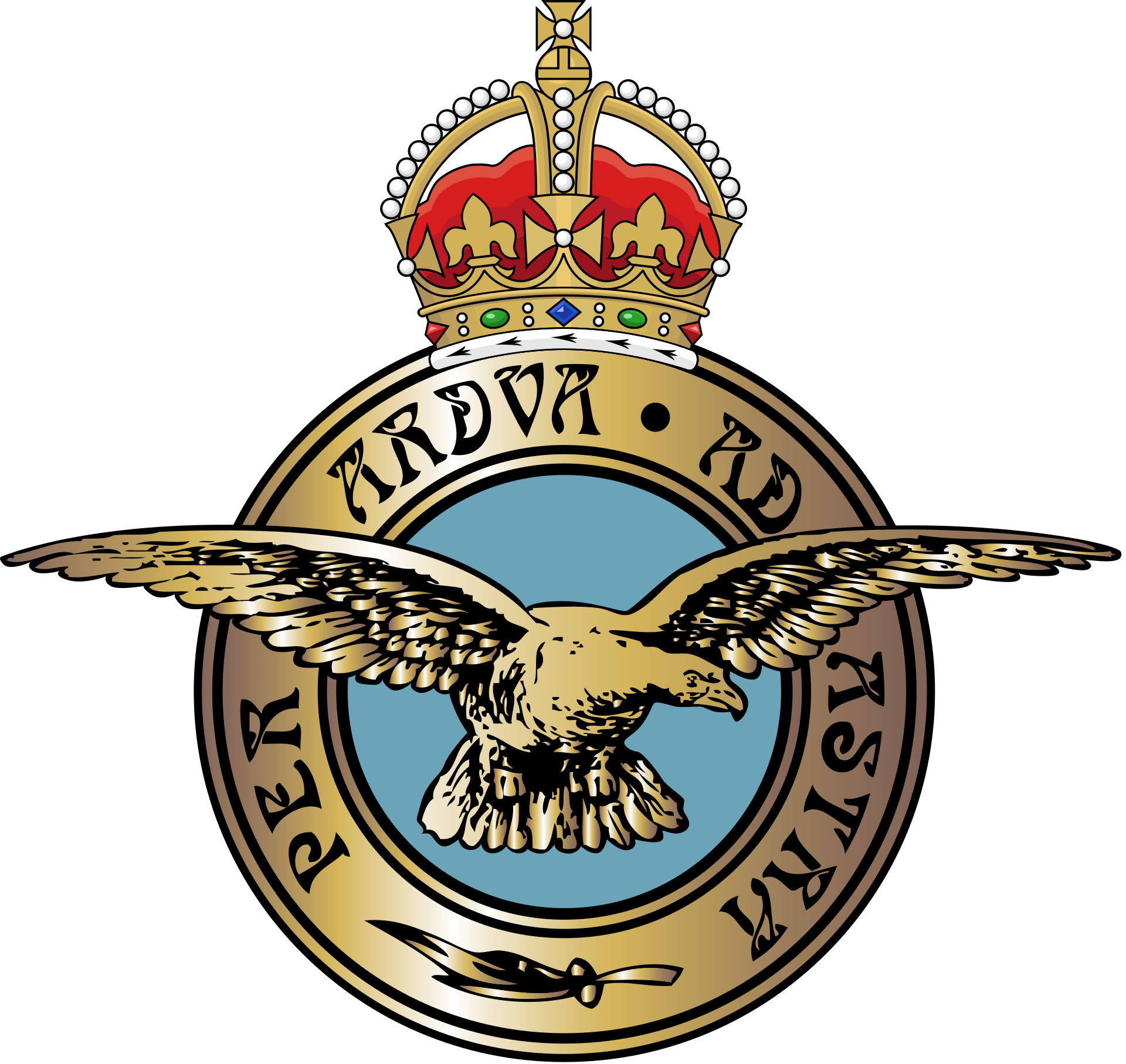
Image: Australian armed forces, Public domain · AI-narrated · Drawn from Wikipedia · CC BY-SA 4.0