

Transcript
In 1851, the Sultan of the Ottoman Empire issued a decree that would change everything for the Catholics of Shkodër. For three centuries they had been forbidden to build, forbidden to worship openly in their own city. Now, at last, permission arrived: they could construct a cathedral. The stone had never been laid. The bells had never been cast. The vault stood empty. Everything still had to be imagined into being.
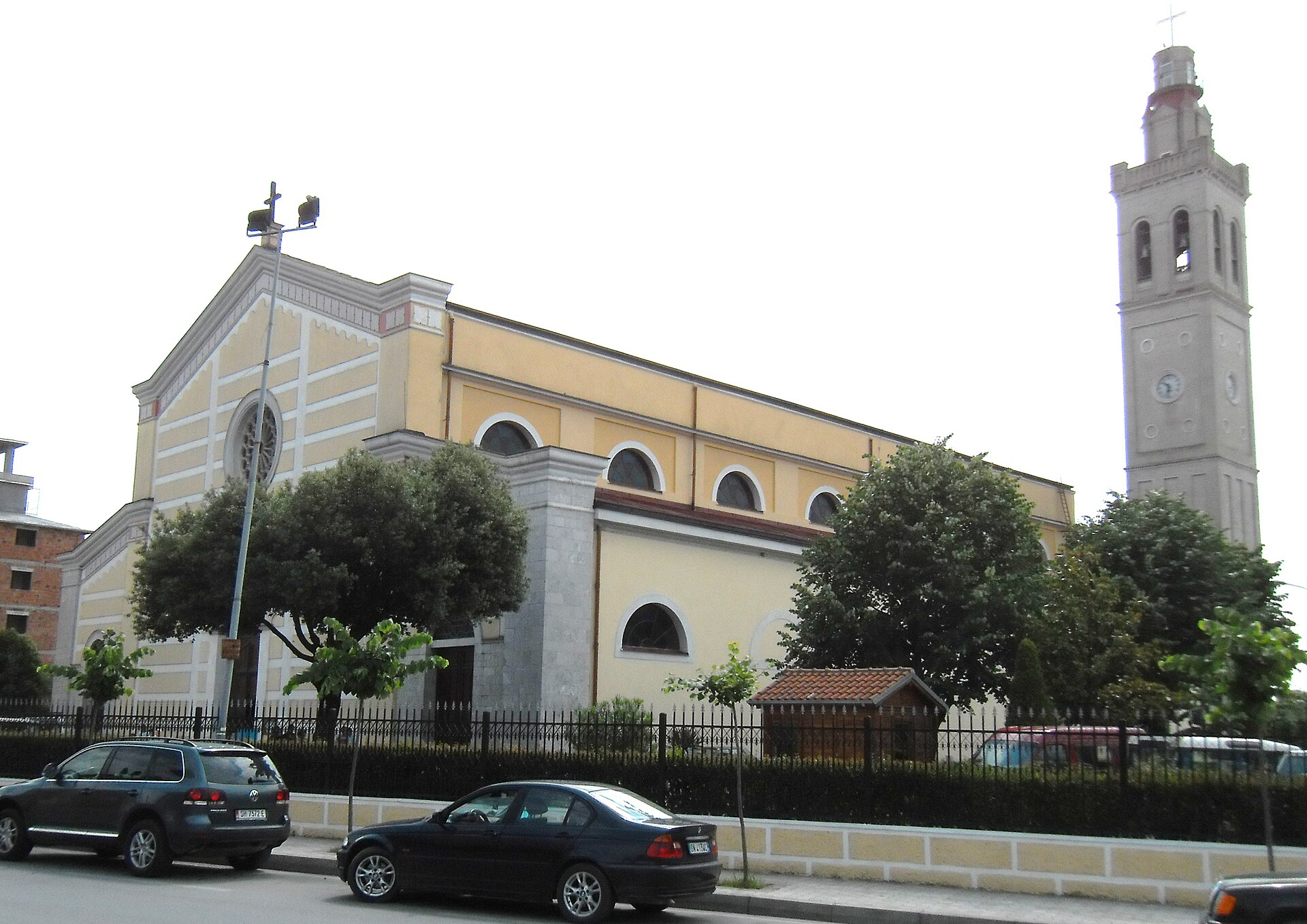
The land came from a man named Palok Krandja. On 7 April 1858, a ceremony gathered local dignitaries and the Ottoman Wāli himself to watch the first stone turned. The Sultan sent seven hundred Turkish liras. The Pope sent one thousand golden scudi. The cathedral would be seventy-four metres long, fifty metres wide, tall enough to hold six thousand standing worshippers. It was to be one of the largest Catholic churches in the Balkans.
The community gave everything. Families sold jewellery to pay for stone. Each Catholic household sent a worker for six months or more. A man named Gurash Shënkolli travelled to Vienna and walked into the Austrian Emperor's office, asking for money for a church in a distant city. Franz Joseph I gave him one hundred and fifty gold napoleons and praised his audacity. An unknown Austrian engineer appeared when the great arch fell twice and fixed it both times, then vanished from history.
Nine years of work ended in 1867. The dome rose in wood. Painters came. In 1909, the Albanian artist Kolë Idromeno painted the vault, filling it with the Lady of Shkodër flanked by two angels dressed in folk costume, the city itself rendered tiny behind them in the background. The clock arrived as a gift from the Kakarriqi brothers. The bells hung in the tower. The cathedral stood complete.
Then came the Siege of Scutari in 1912, when the Montenegrin army bombarded the city. Fire took the bell tower. The southeast wall cracked. The clock stopped. In 1925 the Kakarriqi family bought a replacement, and it kept time for four decades more. Then in 1967, the Communist government closed the cathedral and transformed it into a Palace of Sports. The towers were torn down. The portal was boarded shut. The city's greatest Catholic monument became a gymnasium for a regime that had outlawed the faith it was built to shelter.
In 1990, after the Communist system collapsed, the cathedral doors opened again. On 11 November that year, the first Catholic Mass held anywhere in Albania since 1967 was sung inside these walls. The people who had kept faith across decades of silence returned to find their cathedral still standing, damaged but not erased, ready to be a house of prayer once more.
Image: Sigismund von Dobschütz, CC BY-SA 3.0 · AI-narrated · Drawn from Wikipedia · CC BY-SA 4.0