

Transcript
About eleven thousand, seven hundred years ago, something happened that no human alive at the time could have recognised as a turning point. There was no single moment, no declaration, no treaty signed. But over the course of a few thousand years, scattered groups of people across the globe made a set of decisions, some deliberate and some almost accidental, that would determine the shape of every civilisation that followed. They began to farm. And nothing, not language, not fire, not the wheel, would remake the human world quite so completely.
Before farming, the world's human population lived as it always had: in small, mobile bands, following animals and seasons, building nothing permanent, owning almost nothing. These were not primitive people in any diminishing sense. Their diets were varied and nutritious. Their knowledge of local plants, animals, and landscapes was extraordinarily deep. They worked hard, but they also rested. Anthropologists who have studied surviving hunter-gatherer communities in the modern era sometimes call this way of life the original leisure economy. It was also, by most measures, a healthy one.
The scholar who gave this transformation its name was V. Gordon Childe, writing in his book "Man Makes Himself" in 1936. Childe called it the Neolithic Revolution, borrowing the word revolution to capture not just the change in food production, but the cascading upheaval it triggered across every dimension of human life: social structure, political organisation, health, art, religion, and war. The term stuck, and it remains the standard label for one of the most consequential shifts in the story of our species.
The trigger was climate. Around twelve thousand years ago, the last Ice Age ended, and the world warmed with remarkable speed by geological standards. Sea levels rose, flooding vast coastal areas and pushing human populations inland and into tighter spaces. In some regions, this compression may have intensified competition for resources. In others, the warmer and wetter conditions created landscapes that were suddenly extraordinarily productive, thick with wild grasses, game, and the raw materials from which agriculture could be built.
It was in the Fertile Crescent, the arc of land sweeping from the eastern Mediterranean through what is now Iraq, that the earliest sustained agriculture appears in the archaeological record, beginning around ten thousand years ago. This was not a single invention but a gradual process, unfolding across multiple communities over centuries. The wild ancestors of wheat and barley grew there in abundance. Lentils, peas, and chickpeas were available. So were the animals, sheep, goats, cattle, and pigs, whose domestication would become the other pillar of the new economy.
The domestication of crops worked through an almost invisible mechanism of selection. Farmers harvesting wild grasses naturally gathered the plants whose seeds clung longest to the stem rather than scattering on the wind. Those seeds were the ones brought home, stored, and planted the following season. Over twenty to two hundred years, according to experiments by researchers Gordon Hillman and Stuart Davies using varieties of wild wheat, this unconscious selection was enough to produce a meaningfully domesticated strain. The plant and the human were, in a sense, domesticating each other.
Barley became one of the most important early crops, domesticated in the Near East around nine thousand years ago. It was resilient enough to grow in marginal soils and at high altitudes, making it useful across a wide range of environments. By two thousand years ago, archaeobotanical evidence shows that barley had spread throughout Eurasia. One of the earliest known sites where deliberate cultivation can be confirmed is Gilgal, in the Jordan Valley, where archaeologists in 2006 found caches of figs, wild barley, and wild oats in quantities far too large to be explained by even intensive gathering, at layers dating to around eleven thousand years ago.
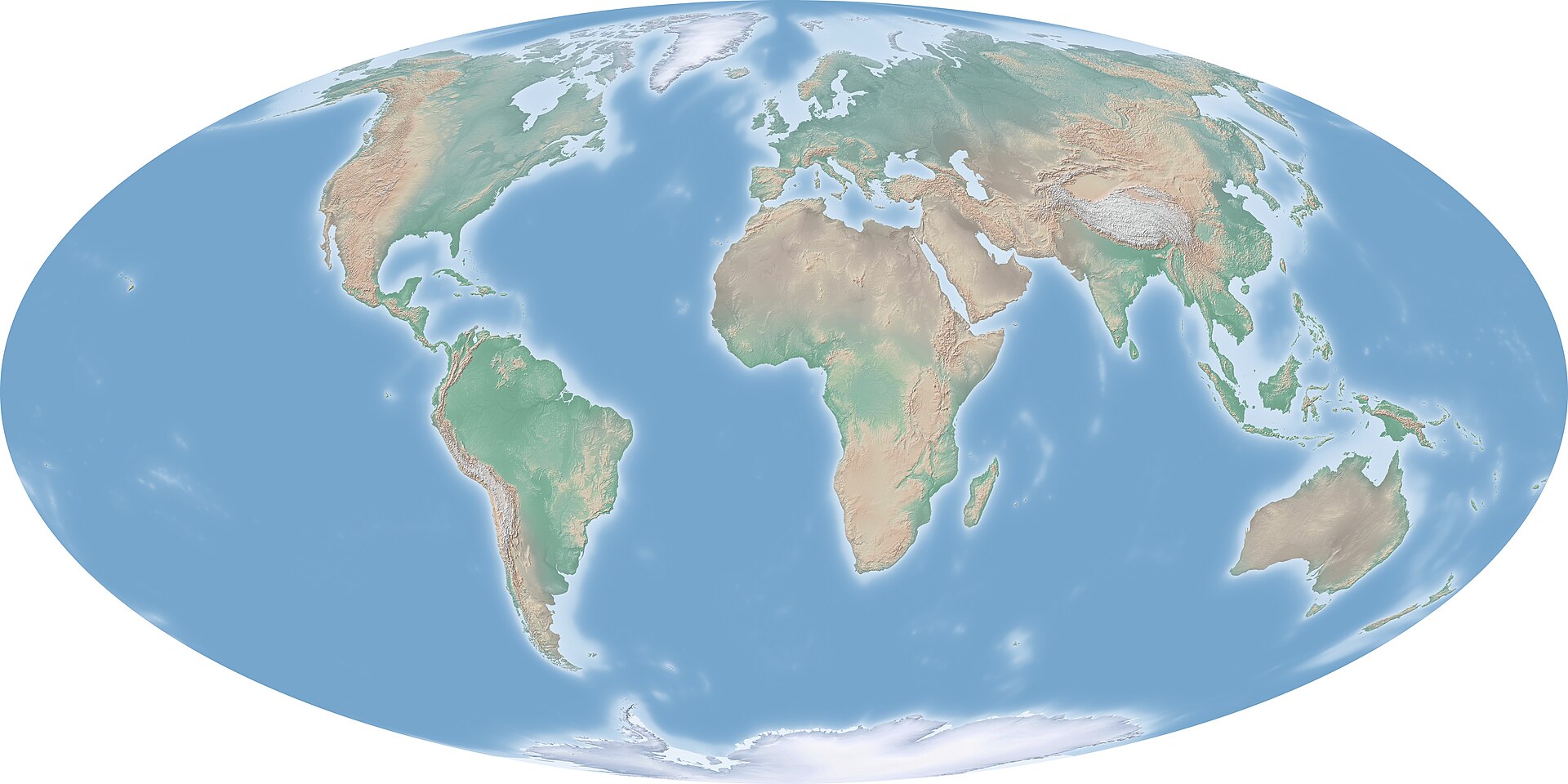
Agriculture did not begin only in the Fertile Crescent. It arose independently, in separate places, at different times, driven by the same fundamental pressures of population growth and environmental opportunity. In China, two distinct agricultural traditions emerged: millet farming along the Yellow River basin in the north, beginning perhaps eight thousand years ago, and rice cultivation along the Yangtze River in the south, with evidence of rice domestication stretching back as far as thirteen thousand years ago in some interpretations of the record.
In the Americas, the story was equally rich and independent. Squash was being cultivated in Mesoamerica by around six thousand years ago, maize by around seven thousand years ago, and beans no later than four thousand years ago. These three crops, grown together, would eventually support the great civilisations of the pre-Columbian world. Potatoes and manioc were domesticated in South America. Sunflower and goosefoot were cultivated by Native Americans in what is now the eastern United States around four and a half thousand years ago.
In New Guinea, drainage ditches at a site called Kuk Swamp indicate cultivation of taro and yam dating back to around eleven thousand years ago. Researchers at the Australian science agency CSIRO have found evidence that taro was introduced to the Solomon Islands from as early as twenty-eight thousand years ago, making it a candidate for the world's earliest cultivated crop. In Africa, three separate regions developed agriculture independently: the Ethiopian highlands, the Sahel, and West Africa. Coffee, sorghum, pearl millet, and the oil palm were among the crops domesticated there, entirely without influence from the Fertile Crescent tradition.
The spread of farming across Europe offers one of the clearest case studies in how the Neolithic transition moved. Beginning from the Aegean around eight and a half thousand years ago, the agricultural frontier advanced westward and northward at a measured pace, reaching Britain after roughly two and a half thousand years of travel. Researchers in the 1970s, studying the pattern of carbon-14 dates from early farming sites, found a remarkably consistent relationship: the further a site was from the Near East, the younger it was. The average speed of the Neolithic frontier across Europe worked out at roughly one kilometre per year.
Read full transcript (18 more paragraphs)
But the Neolithic Revolution was never only about food. The archaeologist Klaus Schmidt, who excavated the site of Göbekli Tepe in what is now southern Turkey, argued that the period also saw the emergence of something equally transformative: organised cooperation between previously separate and often hostile groups. Göbekli Tepe itself, built between about nine thousand five hundred and eight thousand years ago, consists of numerous circular formations of massive carved pillars, each group containing around eleven megalithic stones interpreted as symbolic male figures. The labour required to build it far exceeded what any single community could have provided. Someone had organised strangers to work together.
Schmidt and others concluded that such monuments were evidence of cross-group organisations, early political alliances formed by communities that had previously lived in competition. These were not yet states or kingdoms. They were something more fragile and more remarkable: agreements between groups of people to cooperate, to share territory, to build something together that none of them could build alone. The logic was similar across the world wherever large-scale Neolithic structures appeared, from the desert kites of the Near East, kilometre-long stone traps built to funnel entire herds of wild animals, to the megalithic tombs of Atlantic Europe.
Stonehenge, in southern England, offers perhaps the most famous example of this phenomenon in the Western imagination. Its earliest phase, a circular earthen bank enclosing a communal burial ground, was constructed around five thousand years ago. But the monument was not finished. Over the following two thousand years it was repeatedly altered, expanded, and reconceived, ultimately incorporating two fundamentally different types of stone: massive Sarsen blocks quarried locally, and smaller bluestones transported from Wales, hundreds of kilometres away. The contrast is deliberate and structural. Some archaeologists have read this as a monument built by two distinct peoples who encountered each other, resolved their conflicts, and chose to commemorate their union in permanent stone.
The burial evidence from southern England supports the idea that the communities who built these monuments were, in the phrase used by the archaeologist Colin Renfrew, broadly egalitarian. Analysis of the communal burial mounds of the period shows an average of roughly nine men and eight women laid together per generation, without any indication of rank. No one received a richer grave than anyone else. This was not yet the world of pharaohs and priest-kings. That world was coming, but it had not yet arrived.
Stonehenge's final form appears to have been completed around fourteen hundred years before the common era, and shortly afterwards the monument shows signs of deliberate damage, a pattern archaeologists recognise when one culture displaces another. Around the same time, communal burial gives way to individual tombs for single rulers, a shift that marks the end of the egalitarian phase and the beginning of hierarchy. The Bronze Age had arrived in Britain, evidenced by tin mines in Cornwall and confirmed trade in Cornish metal as far as the Aegean.
The consequences of the Neolithic Revolution were not straightforwardly positive. The anthropological and bioarchaeological record is consistent and sobering. When populations shifted from hunting and gathering to farming, their health declined in almost every measurable way. Average height for European men fell from around a hundred and seventy-eight centimetres to around a hundred and sixty-five centimetres. Women fell by a similar margin. Infant mortality rose. Infectious diseases became more common. Chronic conditions including obesity, type two diabetes, and cardiovascular disease appear in the skeletal record for the first time.
The reason was diet. Hunter-gatherers ate a wide variety of foods, drawn from dozens of species across the seasons. Farmers ate whatever their fields produced, and in much of the ancient world that meant a narrow range of starchy grains. Maize, domesticated in the Americas, was rich in starch but a poor source of iron and essential amino acids. Wheat and barley, the staples of the Fertile Crescent, were more nutritious but still represented a drastic narrowing of the dietary range. A bad harvest meant famine in a way that a bad season of hunting rarely did, because farmers had no alternative food source to fall back on.
Disease followed from the animals. Living in close proximity to domesticated livestock, in increasingly crowded and poorly sanitised settlements, created conditions for pathogens to jump between species. Influenza, smallpox, and measles all appear to have made this crossing. Ancient microbial genetic analysis has shown that early strains of Salmonella were infecting farming communities across western Eurasia at least five and a half thousand years ago. The communities that survived this exposure built up immunities over generations. Those who had never kept livestock did not. When European colonisers arrived in the Americas and the Pacific, carrying millennia of accumulated disease exposure with them, the consequences were catastrophic: ninety per cent or more of many indigenous populations were wiped out.
Yet the population grew anyway. Farming produced calorie surpluses that hunting and gathering could not match, and surpluses fed more children. The researcher Jared Diamond noted that access to milk and stored cereal grains allowed mothers to wean one child earlier and begin nursing another, shortening the interval between births. The result was a demographic explosion, the Neolithic demographic transition, in which farming communities grew faster than foraging ones, spreading their genes, their languages, and their practices across the landscape. The hunter-gatherers who remained were not simply outcompeted. Many were absorbed, displaced, or simply outnumbered into irrelevance.
Food surplus was the engine of social transformation. Once a community could produce more food than it immediately consumed, it could support people who did not themselves farm: administrators, craftspeople, priests, soldiers, and rulers. The division of labour that followed was the foundation of everything we recognise as civilisation. Writing, which first appeared in Sumer in the Fertile Crescent around six and a half thousand years ago, began not as poetry or history but as accounting: lists of quantities of grain and livestock to be delivered, impressed onto clay tablets with cylinder seals. The first bureaucrats were grain counters.
The cities that grew from these surpluses were a genuinely new kind of human settlement. Shuruppak, one of the earliest Sumerian city-states, appears in the oldest written documents humanity possesses. These were not simply large villages. They were organised, stratified, and defended. They had temples, granaries, workshops, and records. They also had rulers, and those rulers increasingly presented themselves not as first among equals but as representatives or embodiments of divine power. The shift from the egalitarian burial mounds of Stonehenge to the individual pyramids of Egypt captures in stone the same transformation that was happening everywhere farming took hold.
Andrew Sherratt, a British archaeologist, identified a second wave of innovation that followed the original domestication of animals, which he called the secondary products revolution. Animals had initially been kept primarily for meat. But communities gradually discovered that the same animals could provide wool, milk, leather, and traction, the ability to pull ploughs and carts. This realisation dramatically expanded the productive potential of farming and opened heavier soils to cultivation. It also made possible nomadic pastoralism, the herding of animals across semi-arid grasslands, which became its own distinct way of life along the margins of the farming world.
The interaction between farming communities and the nomadic herders on their borders was rarely peaceful for long. The Sumerian myths preserve this tension in striking form. The epic of Atra-Hasis, among the oldest written narratives in existence, describes a world in which humans were created specifically to perform agricultural labour for the gods, relieving the lesser deities of their toil. The biblical story of Cain and Abel, the farmer who kills the herder, echoes a conflict that was real and recurring across the Mesopotamian landscape for thousands of years. These myths were not merely stories. They were attempts to make sense of the world that the Neolithic Revolution had created.
The political organisations that emerged from this world were built on a new kind of logic. Aristotle, writing in Greece in the fourth century before the common era, called the human being a zoon politikon, a political animal. What he meant was that humans alone among creatures possessed the capacity to form agreements with strangers, to live under shared rules, and to build institutions that outlasted any individual life. This capacity, the ability to conclude treaties and honour them, to form cross-group organisations capable of constructing monuments and managing territory, was the defining political achievement of the Neolithic period.
The Neolithic Revolution did not end. It is still unfolding. The most recent Neolithisations, the processes by which Stone Age hunter-gatherer communities were absorbed into farming and state-based societies, happened within the last three hundred years, in connection with the colonisation of Australia, the Americas, and the polar regions. Communities living as hunter-gatherers in the depths of the Amazon rainforest have been contacted and transformed, or destroyed, within living memory. The pattern that began eleven thousand years ago in the Fertile Crescent has never stopped.
What the revolution produced was not straightforwardly progress. It produced complexity. It produced more people, living shorter and sicker lives in denser and more unequal communities, governed by institutions of increasing sophistication and increasing coercive power. It produced art, philosophy, mathematics, and medicine. It produced slavery. It produced the city and the state and the army and the written law. It produced, eventually, the conditions in which a minority of scientists began to worry that the same reciprocal dynamic that started with the first cleared field, ever more people requiring ever more cultivated land, might ultimately destabilise the global ecosystems on which all of it depends.
The height of the average European did not return to its pre-Neolithic level until the twentieth century. That single fact, a recovery taking ten thousand years, contains the whole ambiguity of the revolution. The farmers who first broke the soil in the Fertile Crescent were not building utopia. They were solving an immediate problem, feeding people who would otherwise go hungry, in the only way that seemed available to them. What they could not see was that their solution would become the condition of all future human life: the ground beneath every city, every empire, every written word, and every catastrophe that followed.
The Neolithic Revolution's deepest legacy is not any single crop or city or monument. It is the discovery that human beings can choose to cooperate with strangers, to build something together that neither group could build alone, and to bind that cooperation with rules that outlast the moment. That discovery, made independently by communities on every inhabited continent, across thousands of years, is what Aristotle was pointing at. It remains, for better and for worse, the most consequential thing our species has ever learned to do.
Image: Bjoertvedt, CC BY-SA 3.0 · AI-narrated · Drawn from Wikipedia · CC BY-SA 4.0