

Photo: Unknown photographer, Reproduction by Lear 21 at English Wikipedia. · Commons · CC BY-SA 3.0 · Cropped & Resized
Transcript
At the stroke of midnight on 3 October 1990, a black, red, and gold flag rose above the Brandenburg Gate. After forty-five years of division, Germany was one country again.
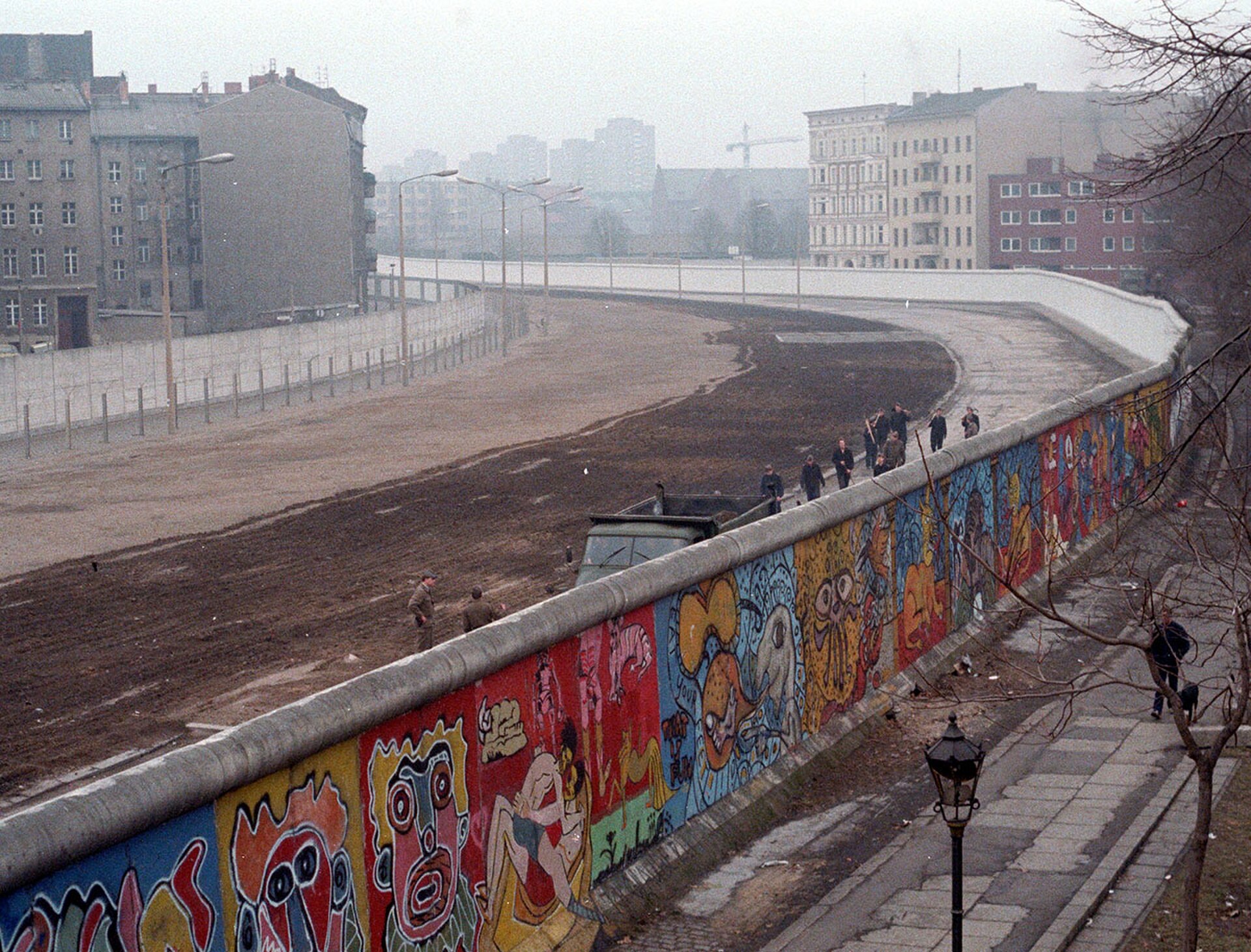
The story begins in the rubble of 1945. Adolf Hitler's suicide on 30 April that year left Germany without a government, and the four Allied powers carved it into occupation zones. Two states emerged: a liberal West Germany in 1949, and a communist East Germany months later. The Berlin Wall, built in 1961, made the division physical and brutal.
For decades, reunification seemed a distant dream. Soviet leader Mikhail Gorbachev's reforms loosened Moscow's grip on Eastern Europe through the late 1980s. Then, on 19 August 1989, a border gate between Austria and Hungary was opened for a single afternoon picnic. Tens of thousands of East Germans poured through. The Iron Curtain had its first real tear.
The protests inside East Germany swelled through the autumn. On the night of 9 November 1989, a miscommunicated announcement sent crowds to the Berlin Wall. Guards stood aside. The Wall fell. The division that had seemed permanent was gone in a single evening.
West German Chancellor Helmut Kohl moved fast. Within weeks he announced a ten-point programme for cooperation and eventual unity. East Germany held its first free elections in March 1990, and the new government committed to rapid reunification. The East German economy was already collapsing; there was little time for delay.
On 1 July 1990, the two economies merged, with the West German Deutsche Mark replacing the near-worthless East German currency at a one-to-one rate. It was generous and costly, dealing a serious blow to the West German budget. But it signalled that reunification was now a matter of weeks, not years.
The international obstacles were formidable. British Prime Minister Margaret Thatcher privately told Gorbachev she did not want a united Germany, and warned European leaders in Strasbourg: "We defeated the Germans twice! And now they're back!" France's François Mitterrand shared her anxiety but concluded reunification was inevitable, and chose to manage it rather than resist it.
The diplomatic solution was the Two Plus Four Treaty, signed in Moscow on 12 September 1990 by both German states and all four wartime Allies. It granted full sovereignty to a reunited Germany, confirmed the Oder-Neisse line as Germany's permanent eastern border, and barred foreign NATO troops from former East German soil.
The Unification Treaty between the two German states was signed on 31 August 1990 and ratified by overwhelming majorities in both parliaments. East Germany voted to dissolve itself. Its five reconstituted states joined the Federal Republic. East and West Berlin merged into a single city, which became the national capital.
At midnight on 3 October 1990, the German Democratic Republic ceased to exist. Reunification was not the birth of a new country but the enlargement of the old West German state, which kept its seat in NATO, the European Community, and the United Nations. The last Russian troops did not leave until August 1994, and the costs, financial and social, ran into the trillions. A "wall in the head" between East and West Germans persisted long after the concrete one came down. But the question of whether two peoples separated for two generations could become one nation again had at least been given the chance of an answer.
Image: Unknown photographer, Reproduction by Lear 21 at English Wikipedia., CC BY-SA 3.0 · AI-narrated · Drawn from Wikipedia · CC BY-SA 4.0