Transcript
CHAPTER: The Expected Heir Did Not Come The old emperor was dying, and everyone knew which son should be summoned. Susima, the eldest, was the presumptive heir, fighting a rebellion in the north-west. But Susima could not suppress that rebellion, and by the time Bindusara, the Mauryan emperor ruling over most of the Indian subcontinent, drew his last breath around 268 BCE, it was not Susima who stood in the capital of Pataliputra. It was a younger prince, one his own father had reportedly despised for his rough, unappealing skin. The unexpected son took the throne. And the world, though it did not yet know this, would never be quite the same again.
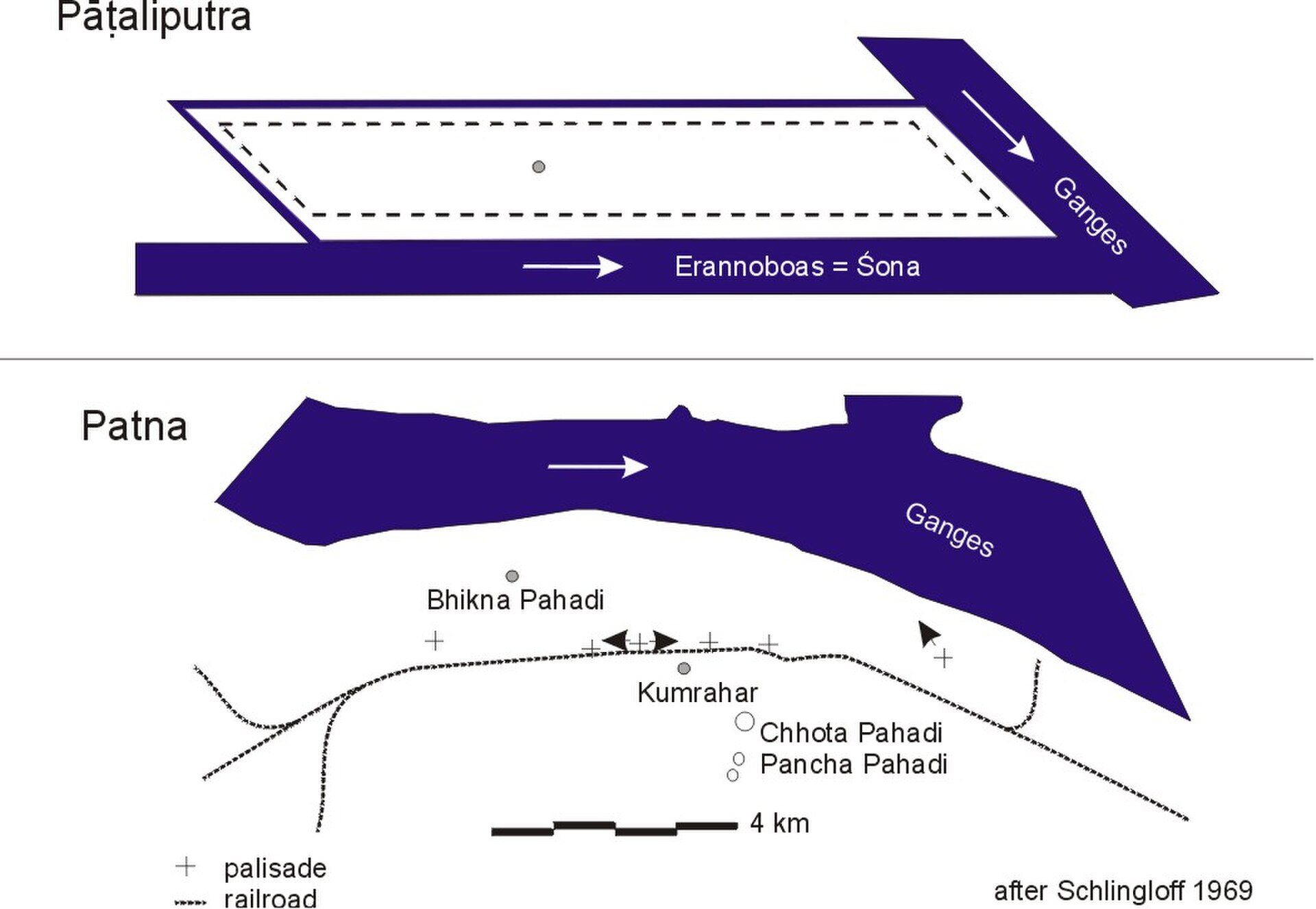
This is the story of Ashoka, the third ruler of the Mauryan dynasty and the man who built an empire stretching from present-day Afghanistan in the west to present-day Bangladesh in the east. His capital sat at Pataliputra, in the Magadha region of what is now northern India, and from there he governed a territory covering almost the entire Indian subcontinent. He lived roughly between 304 and 232 BCE, and by the time of his death he had become, by almost any measure, the most powerful ruler in the ancient world.
CHAPTER: The Prince Nobody Wanted Ashoka grew up in the shadow of his father's preference for other sons. The Buddhist legend known as the Ashokavadana records that Bindusara found his younger son physically repellent, and yet could not entirely ignore him: the prince was clearly capable. When a revolt broke out in the north-western city of Takshashila, present-day Pakistan, it was Ashoka whom Bindusara dispatched to deal with it. The story goes that the emperor sent the army but, perhaps deliberately, withheld the weapons.
Whether the weapons episode is legend or fact, Ashoka's arrival at Takshashila was welcomed. The citizens, according to the tradition, told the prince that their rebellion was directed at corrupt ministers, not the emperor himself. Ashoka had handled a political crisis without a battle. His father, whatever his private feelings, had found a use for the difficult son.
The Sri Lankan Buddhist tradition adds a different posting: that Bindusara made Ashoka the viceroy of Ujjain, an important administrative and commercial province in central India. On the road to Ujjain, the young prince stopped at Vidisha and fell in love with a merchant's daughter named Devi. She would bear him a son named Mahinda and a daughter named Sanghamitta, though she never moved with him to the imperial capital. Their relationship sat outside the formal dynastic hierarchy: useful, warm, but never quite official.
CHAPTER: Blood on the Throne When Bindusara died, the succession was violent. The Mahavamsa, the great Sri Lankan Buddhist chronicle, states plainly that Ashoka had his eldest brother killed and then ascended the throne. Other texts inflate the number, claiming he killed ninety-nine half-brothers, sparing only one. Scholars read the ninety-nine as rhetorical exaggeration, a number Buddhist authors deployed to dramatise how wicked Ashoka was before his transformation. Even cutting through the legend, the picture that emerges is of a disputed succession settled by killing.
Ashoka appears to have consolidated his position over several years before formally consecrating himself as emperor. The Mahavamsa suggests this interregnum lasted about four years, likely spent fighting remaining rival claimants. He was crowned, properly and ceremonially, around 268 BCE. He was not quite the rightful heir by strict custom. He had made himself emperor by force of will and, where necessary, force of arms.
The traditions describe the early Ashoka as a man of considerable cruelty. The Buddhist texts call him Chandashoka, meaning Ashoka the Fierce. The Ashokavadana records that he executed ministers who failed to carry out his orders, and had hundreds of palace women burned for a perceived slight. He reportedly commissioned a purpose-built prison in Pataliputra, pleasant-looking on the outside and a place of systematic torture within; it was known, even in legend, as Ashoka's Hell. These accounts were almost certainly exaggerated by Buddhist authors wanting to make his later conversion look more miraculous. But the underlying portrait of a hard, violent ruler in the early years is plausible enough.
CHAPTER: The War That Changed Everything In his eighth regnal year, around 260 BCE, Ashoka launched a campaign against Kalinga, a prosperous coastal kingdom on the eastern seaboard of India, roughly modern-day Odisha. Kalinga was prosperous and independent, and Ashoka wanted it. His army took it. And what his army did in the taking is the hinge on which his entire life turns.
The scale of destruction is recorded in Ashoka's own words, inscribed on rock faces across his empire. His Major Rock Edict 13 states that during the conquest of Kalinga, one hundred thousand men and animals were killed in direct fighting, many times that number perished through related causes, and a hundred and fifty thousand were carried away as captives. These figures are his own, carved in stone at his command, which makes them unlike almost anything else in ancient history: a king publicly accounting for the suffering his war caused.
The edict continues with a passage of genuine anguish. Ashoka writes that the slaughter, death and deportation involved in conquering a previously unconquered country is now something he finds painful and deplorable. He says the suffering caused to religious people and ordinary householders distresses him even more. He does not frame this as a defeat. The conquest of Kalinga succeeded. But its success, he says, gave him no joy. He had won a war and found he could not live comfortably with the winning.
What followed was not a sudden conversion but a gradual turning. A Minor Rock Edict issued during his thirteenth regnal year mentions that he had been a lay Buddhist follower for more than two and a half years, had not made much progress initially, but in the past year had drawn closer to the Buddhist community and become more earnest. The Kalinga war was the catalyst; the change was real but slow.
Read full transcript (21 more paragraphs)
CHAPTER: Beloved of the Gods Ashoka had already encountered Buddhism before the Kalinga war, though the faith had not yet gripped him. The Sri Lankan tradition describes him being struck, walking through the streets of Pataliputra, by the peaceful bearing of a young Buddhist monk called Nigrodha, who happened to be the posthumous son of the eldest brother Ashoka had killed. The king invited this young monk to preach, listened, and began attending the Buddhist shrine at Pataliputra. There he met the senior monk Moggaliputta Tissa, who became a figure of sustained influence on the emperor.
After Kalinga, the pull became something permanent. Ashoka visited the Bodhi Tree at Bodh Gaya, the site where Gautama Buddha had attained enlightenment, ten years after his coronation. He went on extended tours of the empire, spending over two hundred and fifty days on the road in a single year, visiting Buddhist sites. He made pilgrimage to Lumbini, the place of the Buddha's birth, in his twenty-first regnal year, and there he exempted the village from land tax and reduced its revenue tax to one-eighth, marking the visit with a pillar inscription.
Ashoka began inscribing his edicts onto rock faces, cave walls, and polished stone pillars set up across the empire. These were not lists of military victories or royal genealogies. They were instructions for ethical conduct: how to treat parents, how to treat animals, how to regard people of other faiths, how to build a society that cared for the poor and the sick. The edicts were written in local dialects so they could be read, or read aloud, by ordinary people wherever they were found.
CHAPTER: The Pillars and the Wheel The physical monuments Ashoka left behind still stand. He erected a series of monolithic stone pillars across the subcontinent, each between twelve and fifteen metres tall and weighing up to fifty tonnes, dragged sometimes hundreds of miles to their final positions. The pillars were carved from a single block of stone and finished with a polished surface of remarkable smoothness, a technique known as Mauryan polish, which gave the stone a near-metallic sheen.
The capitals placed on top of these pillars are among the finest sculptures produced in ancient India. The most famous bears four lions seated back-to-back above a carved wheel, a spoked disc representing the wheel of dharma set in motion by the Buddha. This Lion Capital became, two thousand years later, the State Emblem of the modern Republic of India. The wheel itself, the Ashoka Chakra, sits at the centre of India's national flag today. A man who died in 232 BCE is still present every time an Indian passport is opened.
Ashoka also ordered the construction of tens of thousands of stupas, dome-shaped Buddhist shrines containing relics, and monasteries, or viharas, throughout the empire. The claim of eighty-four thousand stupas is clearly symbolic, but the architectural reality is substantial: structures he commissioned or expanded survive at Sanchi, at Sarnath, at the Mahabodhi Temple in Bihar, and at sites across Pakistan and Afghanistan. He is credited with beginning the tradition of permanent stone architecture in India dedicated to a religious purpose.
CHAPTER: A Reign Without More Wars Ashoka's edicts extended his reach beyond the borders of his army. He sent envoys to the Hellenistic kingdoms to the west: his Rock Edict 13 names the Greek king Antiochos to his north-west, and four other kings further still, including Ptolemy and Antigonos, as recipients of his dharma messengers. Whether these Greek rulers adopted any of his teachings is unknown, but the contact was real; a Greek ambassador named Dionysius, sent by Ptolemy, was present at Ashoka's court.
The edicts also record a programme of practical welfare that has no close parallel in ancient governance. Ashoka ordered the planting of medicinal herbs and shady trees along roads, the digging of wells, and the construction of rest houses every eight hundred metres along major routes. He provided medical treatment for both humans and animals in territories across the empire and in neighbouring kingdoms. He restricted the killing of animals in the imperial kitchen: at a certain point, only two peacocks and one deer were slaughtered daily for food, and he intended to reduce even that.
Ashoka appointed a new category of official called the dharma-mahamatra, officers whose specific responsibility was the welfare of vulnerable groups: the aged, the infirm, women, children, and members of all religious sects. He explicitly instructed his people not to denigrate other faiths but to learn about them. His Rock Edict 12 honours people of all religions. This was not a man preaching Buddhism as a state creed; it was a man trying to govern a vast and diverse empire through a shared ethics of decency.
CHAPTER: The Dharma Missionary Around 250 BCE, in his eighteenth regnal year, Ashoka was involved in dispatching Buddhist missions to distant regions. The Sri Lankan tradition credits the senior monk Moggaliputta Tissa with organising nine missions sent to spread the dharma to border areas, each group of five monks led by an elder. To Sri Lanka, Ashoka sent his own son Mahinda, accompanied by several companions. Mahinda had become a Buddhist monk at the age of twenty, in his father's sixth regnal year.
A generation after Mahinda's departure, Ashoka's daughter Sanghamitta travelled to Sri Lanka carrying a sapling of the original Bodhi Tree, to establish an order of Buddhist nuns. The sapling she brought was planted at Anuradhapura, where it still grows; it is regarded as the oldest tree in the world with a known planting date. The missions Ashoka sponsored or supported helped carry Buddhism into Sri Lanka, into Kashmir, into parts of Central Asia, and eventually into the broader Asian world.
The Third Buddhist Council, according to Sri Lankan tradition, was convened during Ashoka's seventeenth regnal year at the monastery he had founded in Pataliputra. The council, overseen by Moggaliputta Tissa, expelled monks whose conduct or doctrine was considered unorthodox and attempted to establish a unified standard for the Buddhist community. The North Indian Buddhist tradition makes no mention of this council, which has led to debate about its historicity. What is clear is that Ashoka used both official authority and personal patronage to shape the Buddhist institution of his time.
CHAPTER: The Long Decline Ashoka's last dated inscription, his Pillar Edict 4, comes from his twenty-sixth regnal year. After that, the sources are almost entirely legendary. The Sri Lankan tradition records that his chief empress Asandhamitta, who had been his companion for decades, died during his twenty-ninth regnal year. Three years later, a younger woman named Tissarakkha was elevated to the title of empress.
Both the Mahavamsa and the Ashokavadana record that Tissarakkha, jealous of the attention Ashoka lavished on the Bodhi Tree, used sorcery to destroy it. The Ashokavadana adds a darker episode: she made advances towards Ashoka's son Kunala, was rejected, and during a brief period when Ashoka had granted her ceremonial authority, she had Kunala blinded. According to the legend, Ashoka's response was ferocious; he threatened her with elaborate tortures before having her executed. These stories carry the flavour of sectarian legend, but they document a court in which the emperor's grip on events was visibly loosening.
The Buddhist texts describe Ashoka's final days as ones of straitened generosity. His ministers, alarmed by his continued gifting of state funds to the Buddhist community, cut off his access to the treasury. He gave away his personal possessions instead, and they restricted that too. According to the Ashokavadana, on his deathbed, the only thing he had left to offer the sangha was half of a myrobalan fruit, a small tart berry, which he held out as his final donation. The image lodged in Buddhist memory for centuries: the greatest emperor in Indian history, reduced at the last to half a piece of fruit.
CHAPTER: Death and What Followed Ashoka died around 232 BCE, in his thirty-seventh regnal year. He had ruled for nearly four decades. No contemporary source records the circumstances; the legends describe a long illness and a man increasingly cut off from the resources of his own empire. After his death, the Mauryan dynasty declined rapidly, fragmenting within roughly fifty years and suffering invasion from the Bactrian Greeks to the north-west. Some historians have argued that Ashoka's turn away from war weakened the military structures that held the empire together. Others have pushed back against that verdict, arguing that the scale of his pacifism has been greatly overstated.
The most precise measure of what Ashoka meant, and how completely he was forgotten, is this: for nearly two thousand years, almost nobody knew he had existed. The Brahmi script in which he had inscribed his words across hundreds of rock faces fell out of use. His pillars stood, but nobody could read what they said. Chinese pilgrims visited his sites in the fifth and seventh centuries and wrote down garbled accounts of what local guides told them, since the guides could no longer read the inscriptions either. A Brahmin scholar, asked in the fourteenth century to translate one of Ashoka's pillars for a Muslim sultan, invented a prophecy saying the sultan had been destined to move it.
The key that unlocked Ashoka's silence was James Prinsep, a British scholar working in Calcutta who in 1837 deciphered the Brahmi script. He could suddenly read the inscriptions on the pillars and rock faces. The man who emerged from those inscriptions was not what Prinsep or anyone else expected: a conqueror who had publicly repented conquest, a king who had written about the suffering he caused, a ruler who had ordered his officials to care for the poor and the aged and the animals. A year later, a Sri Lankan manuscript confirmed that the name Priyadarshi, meaning one who regards amiably, found throughout the edicts, belonged to the grandson of Chandragupta and son of Bindusara who had been viceroy at Ujjain.
CHAPTER: The Wheel on the Flag The modern Republic of India chose its symbols with care. The Lion Capital from Ashoka's pillar at Sarnath became the state emblem, the lions now facing outward in four directions above the carved wheel of dharma. That same wheel, the Ashoka Chakra, navy blue on white, was placed at the centre of the Indian national flag when independence came in 1947. A third-century BCE emperor's personal symbol now flies above every government building in the world's largest democracy.
What the edicts say, stripped of the legends that accumulated around them, is straightforward and almost jarring in its directness. Ashoka calls his people his children. He says he wants their welfare in this world and the next. He says he regrets what his army did in Kalinga. He says no animal should be slaughtered for a pointless sacrifice. He says doctors should be available to the poor. He says people of different faiths should listen to each other rather than arguing. He says the dharma is not a creed but a set of obligations: to the living, to the vulnerable, to the world that exists beyond the palace walls.
Ashoka died with half a fruit in his hand, his treasury locked against him, his empire already beginning to crack. What outlasted everything else was the writing on the rocks: the record of a man who had conquered by force, seen what force truly costs, and spent the remaining decades of his life trying to govern differently. Whether that effort succeeded or failed, whether his pacifism was wisdom or weakness, the choice he made after Kalinga was real, and deliberate, and his own. No king before him had left behind anything like it.
AI-narrated · Drawn from Wikipedia · CC BY-SA 4.0