

Transcript
The descent stage of Eagle is still on the Moon. It has been there since July 1969, sitting in the Sea of Tranquility, its legs planted in dust that no wind will ever disturb. The ladder Armstrong climbed down is still attached. The plaque bolted to it still reads: "Here men from the planet Earth first set foot upon the Moon. We came in peace for all mankind." Nobody has been back to retrieve it. Nobody has been back at all. What happened there in those twenty-one hours remains the furthest any human being has ever walked from home.
This is the story of Apollo 11, the American spaceflight that, in July 1969, landed two men on the Moon and brought them safely back to Earth. It was the culmination of a decade-long national effort, a direct response to a Cold War challenge, and a moment watched live by roughly six hundred million people, about one fifth of everyone alive. To understand how it happened, you have to go back not to a launch pad, but to a satellite the size of a beach ball, beeping in the dark above a stunned world.
On the fourth of October 1957, the Soviet Union launched Sputnik 1, the first artificial satellite ever placed in orbit. It was a small metal sphere, but its implications were enormous. If the Soviets could put an object into orbit, they could, in principle, deliver a nuclear weapon to any point on Earth. The United States, which had considered itself the world's leading technological power, found itself suddenly, visibly behind. The event triggered what became known as the Space Race: a competition between two superpowers that was, at its core, a contest over which system, democracy or communism, could do the harder thing.
President Dwight Eisenhower responded by creating NASA and launching Project Mercury, whose goal was simply to put an American into Earth orbit. But the Soviets kept ahead. On the twelfth of April 1961, cosmonaut Yuri Gagarin became the first human in space, completing a full orbit of the Earth. Three weeks later, astronaut Alan Shepard became the first American in space, but his fifteen-minute flight was suborbital, a much smaller achievement. The gap felt humiliating.
President John F. Kennedy, who had taken office that January, decided the only way to win was to leapfrog. Rather than compete on territory the Soviets already owned, he proposed a goal so ambitious that both sides would be starting from roughly the same place. On the twenty-fifth of May 1961, he addressed Congress and set the challenge plainly: the United States should commit itself, before the end of the decade, to landing a man on the Moon and returning him safely to Earth.
A year later, at Rice University in Houston, Kennedy sharpened the argument before a crowd of about forty thousand people. "We choose to go to the Moon," he said, "not because it is easy, but because it is hard; because that goal will serve to organize and measure the best of our energies and skills." The speech became one of the most quoted of the twentieth century. What it did not mention was how staggeringly difficult the engineering would actually be.
NASA's engineers settled early on a crucial design choice: rather than flying a single spacecraft directly to the Moon and back, they would use a technique called lunar orbit rendezvous. The mission craft would have three distinct parts. A command module, named Columbia, would house all three astronauts for the journey and be the only piece to return to Earth. A service module would supply propulsion, power, oxygen, and water. And a lunar module, named Eagle, would detach in lunar orbit, carry two astronauts to the surface, then lift them back up to rejoin Columbia. This three-part architecture meant the whole thing could be launched on a single rocket, the Saturn V, then under development.
The Saturn V was itself a staggering achievement. Standing over a hundred metres tall and producing more thrust at liftoff than any machine before or since, it remains the most powerful rocket ever flown to space. Alongside it, NASA developed the technologies needed to navigate between worlds, to dock spacecraft in orbit, and to keep human beings alive in the vacuum of space. The preceding Mercury and Gemini programs served as the proving ground, mission by mission, for every technique Apollo would need.
Progress came at a cost. On the twenty-seventh of January 1967, during a routine ground test at the launch pad, a fire broke out inside the Apollo 1 command module. Three astronauts, Gus Grissom, Ed White, and Roger Chaffee, died within seconds. The programme halted. Investigations ran for months. The command module was redesigned from the inside out. It was a devastating setback, and it left a shadow over everything that followed. Armstrong would later carry a pin that the widows of those three men had given to NASA flight operations chief Deke Slayton, a pin intended for the ill-fated mission. He took it with him to the Moon.
After the fire, Apollo rebuilt itself methodically. In October 1968, Apollo 7 tested the redesigned command module in Earth orbit. In December, Apollo 8 carried three astronauts all the way around the Moon and back, the first humans to leave Earth's orbit entirely. In March 1969, Apollo 9 tested the lunar module in Earth orbit. In May, Apollo 10 flew the entire mission profile in lunar orbit, descending to within fifteen kilometres of the surface but stopping short of landing. By the summer of 1969, every piece had been tested. The only thing left was to land.
Read full transcript (32 more paragraphs)
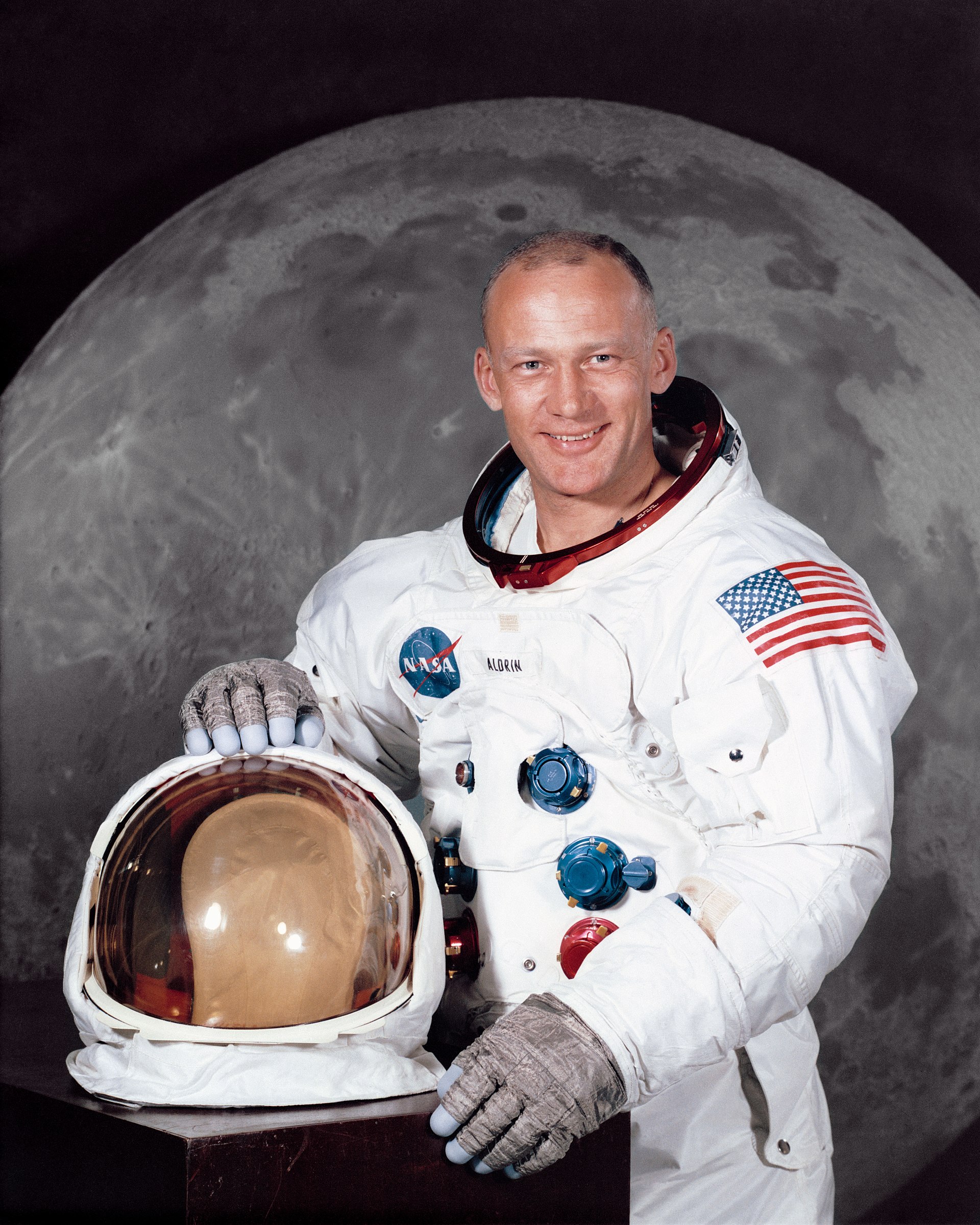
The crew selected for Apollo 11 was not a band of close friends. Those who knew them described the three men as "amiable strangers", a phrase Aldrin and Collins both used. Neil Armstrong, the commander, was famously reserved, almost unreachable. Buzz Aldrin, the lunar module pilot, was intense and ambitious. Michael Collins, the command module pilot, described himself as a loner. They worked well together because they were professionals. They did not particularly need to like each other.
Armstrong had been a naval aviator, then a test pilot, and had flown the experimental X-15 rocket plane to the edge of space before joining the astronaut corps. He was chosen to command Apollo 11 through the normal crew rotation system, having served as backup commander on Apollo 8. Slayton, who managed crew assignments, gave Armstrong the option to replace Aldrin with another astronaut, thinking Aldrin could be difficult. Armstrong thought it over for a day and declined. He believed the other man deserved a command of his own, and Aldrin was the right fit for the seat.
The question of who would be first to step onto the Moon was more fraught than it appeared. Early versions of the mission plan had the lunar module pilot exit first, as had been the practice on Gemini spacewalks. Aldrin lobbied for that arrangement. But NASA's senior management, after a private meeting, concluded that the first person to walk on the Moon should be the mission commander, a calm and measured figure the world could trust. Armstrong was told the decision in late spring 1969. He agreed. The announcement was made publicly in April.
Collins, meanwhile, designed the mission emblem. He chose the bald eagle as the central image, at a colleague's suggestion added an olive branch in its talons rather than its beak, and placed the Earth in the background. The crew decided not to put their names on the patch. It was, they felt, not theirs alone. It belonged to everyone who had worked to get them there.
An estimated one million people gathered along the roads and beaches near Kennedy Space Center in Florida on the morning of the sixteenth of July 1969. Vice President Spiro Agnew watched from the stands alongside former President Lyndon Johnson. President Nixon watched from the White House. Around the world, twenty-five million Americans alone watched on television, and broadcasts went live to thirty-three countries. At 13:32 UTC, Saturn V AS-506 ignited and lifted away from Launch Pad 39A. The five engines of the first stage produced a noise and a shockwave that people felt in their chests from kilometres away.
The rocket performed exactly as planned. The first stage separated about two and a half minutes after launch. The second stage followed about nine minutes in. Then the third stage ignited, carried the spacecraft to a near-circular orbit around the Earth, and two and a half hours later, fired again to push Apollo 11 onto its trajectory toward the Moon. Collins then separated Columbia from the spent rocket stage, turned it around, and docked nose-to-nose with Eagle, which was still attached. The combined spacecraft coasted toward the Moon. The journey would take three days.
On the nineteenth of July, Apollo 11 passed behind the Moon and fired its engine to slow down enough to be captured by lunar gravity. The crew entered orbit. Looking down through the windows at the grey, cratered surface below, they could pick out their intended landing site in the southern Sea of Tranquility, a relatively flat plain the size of a small country. Collins inspected it from orbit. Armstrong and Aldrin began preparing Eagle.
At 12:52 UTC on the twentieth of July, Armstrong and Aldrin crawled through the tunnel from Columbia into Eagle. Collins sealed the hatch behind them, then watched as Eagle separated and slowly rotated in front of him so he could inspect its landing legs. "The Eagle has wings," Armstrong called out. Collins watched it go, then flew Columbia alone.
The powered descent to the lunar surface began at 20:08 UTC. Almost immediately, the crew found themselves running ahead of their planned track, passing landmarks two or three seconds early. Eagle was moving too fast, and would touch down several kilometres west of the target point. There was nothing to be done about it mid-descent. Then, five minutes into the burn, with the surface still nearly two kilometres below, the guidance computer began throwing alarms: codes 1201 and 1202, indicating it was overloaded and shedding lower-priority tasks to keep flying. Inside Mission Control in Houston, a young computer engineer named Jack Garman told the guidance officer it was safe to continue. That call went up to the crew. They kept descending.
At around three hundred metres above the surface, Armstrong looked out and saw that the computer was steering them toward a boulder-strewn crater about ninety metres across. He took semi-automatic control and flew past it, scanning for somewhere flat. Aldrin called out altitude and speed in a steady stream. Armstrong found a clearer patch and aimed for it, then discovered a smaller crater beneath him. He cleared that too. They were now thirty metres up, with less than ninety seconds of propellant left. Dust kicked up by the engine began obscuring the surface. Armstrong picked out some large rocks at the edge of the dust cloud and used them to judge his speed. He eased Eagle down.
A small light on the instrument panel told Aldrin that one of the probes hanging below the landing legs had touched the surface. "Contact light," he said. Armstrong was supposed to cut the engine immediately, but in the intensity of the moment, he did not. Three seconds later, Eagle settled onto the Moon. He shut the engine down. Aldrin ran through the post-landing checklist in a rapid, controlled voice. Then Armstrong called Houston: "Tranquility Base here. The Eagle has landed." The flight controller who answered could barely speak: "You've got a bunch of guys about to turn blue. We're breathing again."
The plan called for the crew to sleep before going outside. They could not sleep. Preparations for the moonwalk took three and a half hours instead of the planned two, partly because the cabin was cluttered with equipment that had been neatly laid out in training but now had to be found and organised in a cramped, pressurised space. At 02:39 UTC on the twenty-first of July, Eagle's hatch was opened. Armstrong squeezed through it with his bulky life support backpack and began climbing down the nine-rung ladder.
Partway down, he pulled a handle that deployed a small equipment shelf on Eagle's side and activated a television camera mounted there. The image it sent back was in a slow-scan format incompatible with standard broadcast television, so it was displayed on a monitor and re-filmed by a conventional camera. The result was a ghostly, low-resolution black and white picture. But it was enough. Six and a half hours after landing, at 02:56 UTC, Armstrong stepped off the ladder's lowest rung and placed his left boot in the lunar dust. He said: "That's one small step for man, one giant leap for mankind." He had intended to say "for a man", but the word was either lost in the transmission or never spoken. He later believed he had said it.
Six hundred million people watched on Earth. About seven minutes after stepping out, Armstrong collected a small soil sample and tucked it into his thigh pocket, a precaution in case the mission had to be cut short. Nineteen minutes after Armstrong, Aldrin descended the ladder and looked around. He described what he saw with two words: "Magnificent desolation."
The two men spent about two and a half hours on the surface. They planted an American flag in the hard lunar soil, struggling to push the pole more than a few centimetres deep. They spoke by telephone with President Nixon, who called it "the most historic phone call ever made from the White House." They deployed scientific instruments, including a seismometer to detect moonquakes and a reflector array still used by laser-ranging experiments on Earth. They collected rock and soil samples, eventually gathering about twenty-one and a half kilograms of lunar material. And they uncovered a plaque on Eagle's ladder: "We came in peace for all mankind."
Three new minerals were found in the samples brought back: armalcolite, tranquillityite, and pyroxferroite. Armalcolite was named after the three crew members. All three minerals have since been found on Earth as well. The scientific instruments left on the surface continued returning data for years. The seismometer ran until August 1969. The laser reflector is still in use.
While Armstrong and Aldrin walked on the surface, the Soviet probe Luna 15 was orbiting the Moon in a last attempt to scoop up lunar soil and return it to Earth before Apollo 11 could. It had launched three days before Apollo 11, reached lunar orbit first, and carried out its mission in secret. But about two hours before Eagle's ascent stage lifted off, Luna 15 descended and crashed in the Sea of Crises. British astronomers monitoring its transmissions noted, with characteristic understatement, that it had been "drama of the highest order." The Space Race, in that moment, was over.
Aldrin re-entered Eagle first, then they hauled the sample boxes and film up through the hatch on a simple pulley cable. Before climbing in, Armstrong tossed up a small bag of memorial items: a patch from the Apollo 1 mission in memory of Grissom, White, and Chaffee; two medals commemorating Soviet cosmonauts who had died in 1967 and 1968; and a gold olive branch. Then he jumped to the third rung of the ladder and climbed in. The hatch was sealed. They slept.
While they slept, the Nixon administration's speechwriters had a contingency text ready: a statement the President would read if Eagle failed to lift off and the two men were stranded on the Moon. Mission Control would close communications. A clergyman would commend their souls, as if to burial at sea. It was never needed. But it existed.
Before lift-off, Aldrin discovered that a circuit breaker needed to arm the ascent engine had been broken, probably knocked by a suit during movement in the cramped cabin. Without it, they could not fire the engine. He found that the tip of a felt-tip pen was just the right size to push the switch into place. At 17:54 UTC on the twenty-first of July, the ascent engine fired. Eagle rose from the descent stage, which remained behind on the surface. Aldrin looked up in time to see the American flag topple in the rocket exhaust. They were going home.
Eagle docked with Columbia three and a half hours later. Armstrong and Aldrin transferred back through the tunnel. Eagle's ascent stage was jettisoned into lunar orbit. Collins, who had spent twenty-one hours flying alone around the Moon, later wrote that the feeling during those long passes over the far side, out of contact with Earth, was not loneliness or fear, but something closer to exultation.
On the twenty-third of July, the night before splashdown, the three men made a final television broadcast. Collins thanked the thousands of people whose work had made the mission possible. Aldrin called it a symbol of "the insatiable curiosity of all mankind." Armstrong spoke of history and of the engineers and technicians who had built every piece of the craft. Then he said goodnight.
The recovery operation had nearly been complicated by a storm. A US Air Force officer with access to classified satellite imagery spotted a weather system moving toward the original splashdown zone. On his warning, the recovery area was shifted two hundred and fifteen nautical miles to the northeast, a change that required a different re-entry sequence never before flown. On the twenty-fourth of July, Columbia hit the atmosphere at high speed, slowed through a sequence of computer-controlled manoeuvres, deployed its parachutes, and struck the Pacific Ocean about twenty-four kilometres from the aircraft carrier USS Hornet.
The capsule came down upside down but was righted by flotation bags within ten minutes. Divers from a helicopter attached a sea anchor, then passed biological isolation suits to the astronauts and helped them into a life raft. There was genuine concern, however small, that they might have brought back something from the lunar surface, some unknown pathogen. The astronauts were wiped down with a disinfectant solution before being winched aboard the recovery helicopter. They were transferred to an isolation facility aboard Hornet, where President Nixon was waiting on deck to welcome them back. "As a result of what you've done," he told them through the window of the quarantine trailer, "the world has never been closer together before."
The three men remained in quarantine for twenty-one days in total, first aboard Hornet, then at the Lunar Receiving Laboratory in Houston. On the tenth of August 1969, health officials lifted the quarantine. The Moon, it appeared, harboured nothing that could harm them.
On the thirteenth of August 1969, Armstrong, Aldrin, and Collins rode through ticker-tape parades in New York City and Chicago. An estimated six million people lined the streets. Broadway was temporarily renamed Apollo Way. That evening, a state dinner in Los Angeles was attended by forty-four state governors, the Chief Justice of the United States, and ambassadors from eighty-three nations. Nixon awarded each man the Presidential Medal of Freedom, the highest civilian honour in the country.
The celebrations continued into the autumn. The crew embarked on a thirty-eight-day world goodwill tour titled Giant Leap, visiting twenty-two countries between September and November 1969. They went to London, Paris, West Berlin, Rome, Belgrade, Tehran, Mumbai, Bangkok, and Sydney, among others. In Belgrade, between four hundred thousand and five hundred thousand people lined the route from the airport. In London, they were received at Buckingham Palace by Queen Elizabeth the Second. In West Berlin, the mayor took them to see the Berlin Wall.
Not everyone celebrated. On the day before launch, protesters led by civil rights activist Ralph Abernathy had gathered outside Kennedy Space Center, arguing that the billions spent on the space programme should have gone to fighting poverty at home. Jazz poet Gil Scott-Heron wrote a poem called "Whitey on the Moon" expressing his view that the achievement was emblematic of racial inequality in America. NASA Administrator Thomas Paine met with Abernathy and invited the protesters to watch the launch as guests. Abernathy, witnessing the Saturn V rise, prayed for the astronauts.
The Soviet Union, for its part, publicly denied it had ever been racing to the Moon at all. Officials said crewed lunar landings were dangerous and unnecessary. It was not until 1989 that it was confirmed the Soviets had indeed attempted to build a rocket capable of reaching the Moon, but had been unable to make it work. The Space Race had ended not with a negotiated draw but with one side simply not arriving.
Columbia, the command module that carried the three men home, went on a tour of the United States and was eventually placed in the National Air and Space Museum in Washington, where it remained for decades. Armstrong's spacesuit was displayed nearby. The descent stage of Eagle remains where Armstrong and Aldrin left it, in the Sea of Tranquility, with the plaque still attached to the ladder. The ascent stage, jettisoned into lunar orbit after docking, is believed to have eventually impacted the lunar surface, though its precise location is unknown. A 2021 analysis suggested it might still be in orbit.
In 2012, Neil Armstrong died at the age of eighty-two, following complications from heart surgery. After his death, his widow found a white cloth bag in a closet. Inside were items that should have been left behind on the Moon, including the sixteen-millimetre camera that had filmed the first lunar landing. The camera is now displayed at the National Air and Space Museum.
What Armstrong, Aldrin, and Collins did in eight days in July 1969 has not been repeated. Twelve men walked on the Moon across six Apollo missions between 1969 and 1972. None have gone back since. The descent stage of Eagle sits in dust that has not shifted in more than fifty years, a permanent marker at the place where the hardest thing humanity had ever attempted was accomplished, on time, as promised, watched by a world that held its breath and then, for a moment, felt like one.
Image: Neil A. Armstrong, Public domain · AI-narrated · Drawn from Wikipedia · CC BY-SA 4.0